
Category Archives: Life

From 1984 to the metaversum

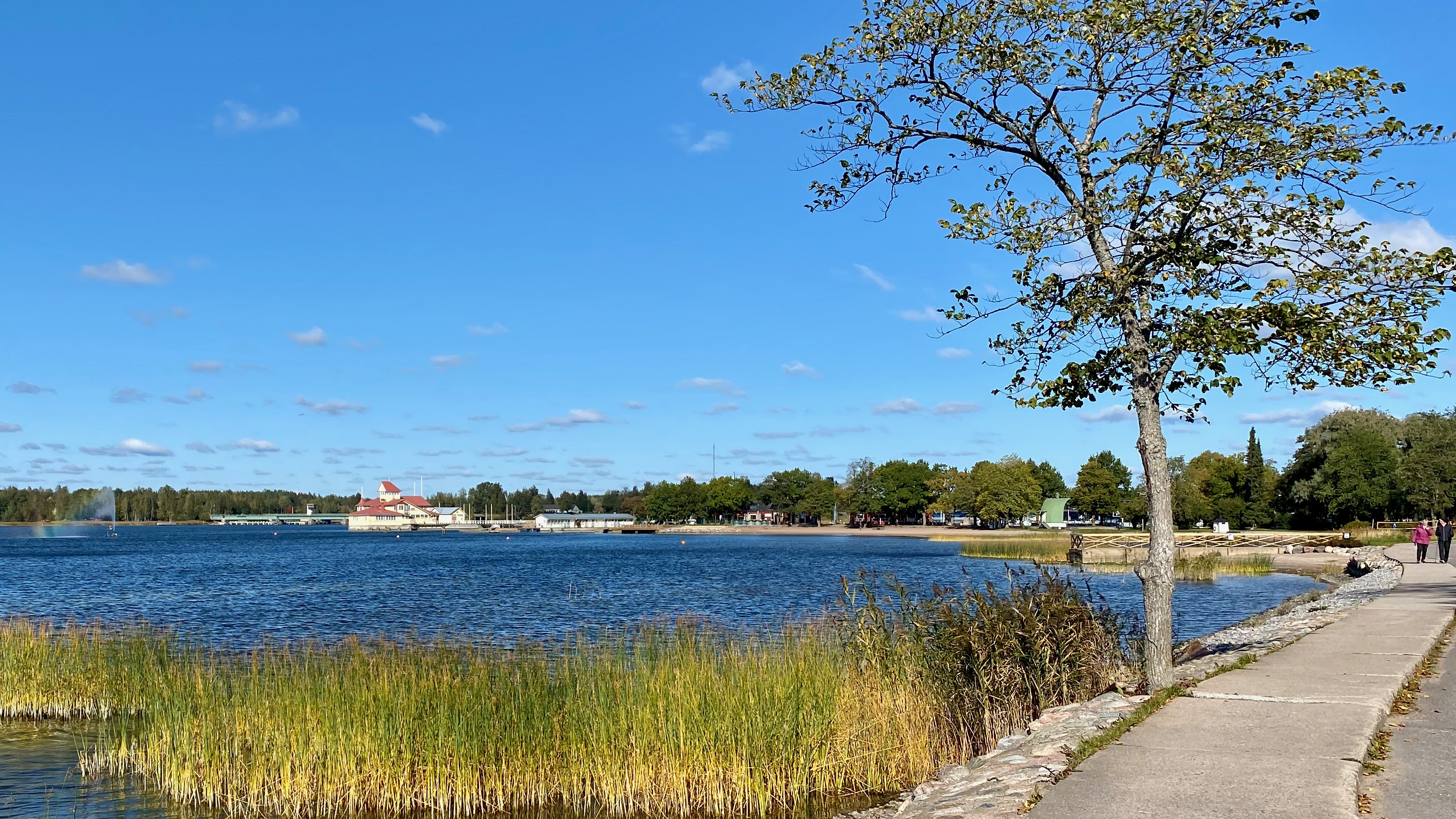
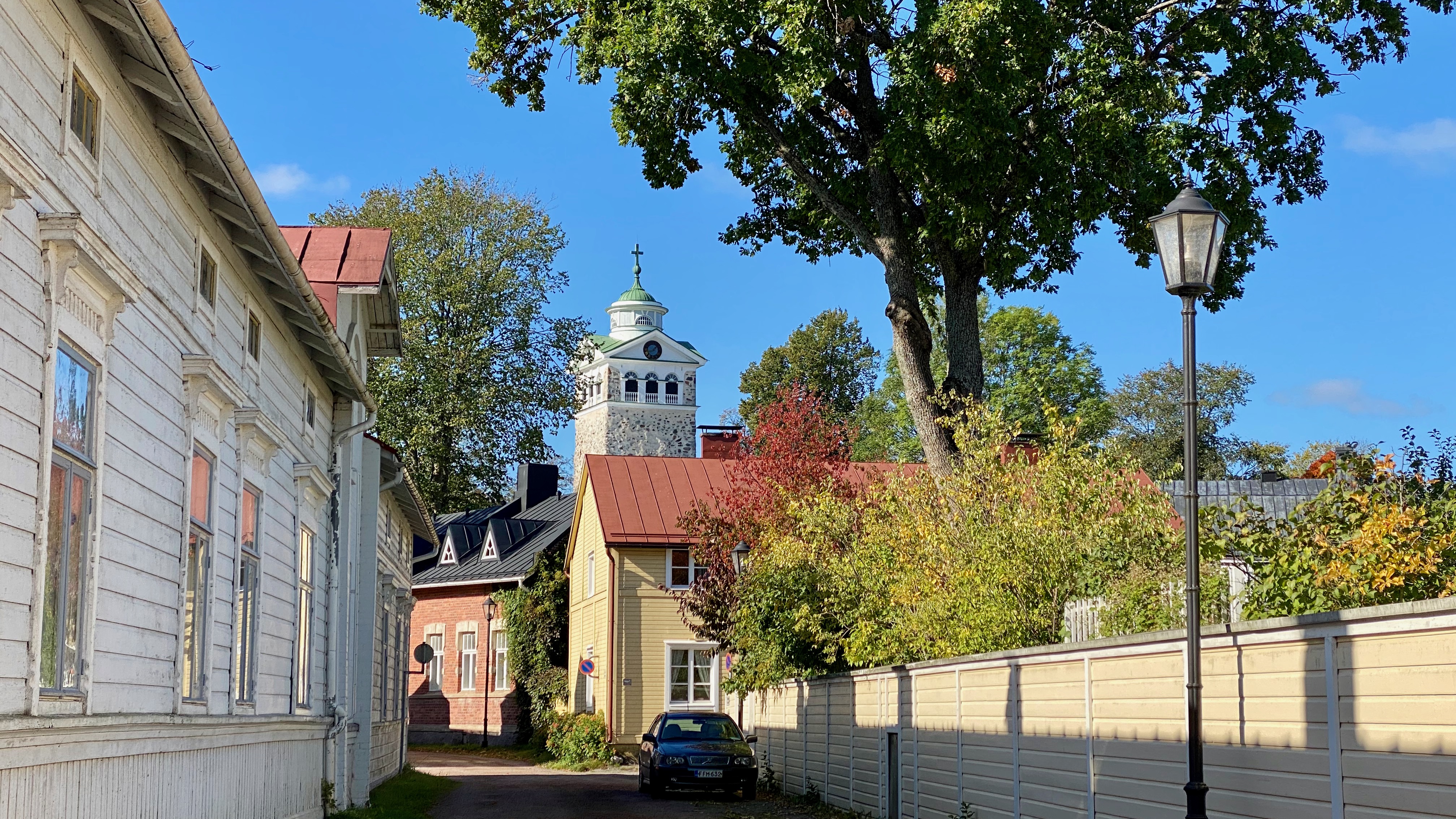
Peace reigns in the little city of Tammisaari. Nothing in this idyllic corner of the world brings to mind George Orwell’s iconic novel 1984. Yet my thoughts drift to it.

Orwell was far ahead of his time, but not far enough. He imagined a world ruled by totalitarian superpowers; a world full of mass surveillance; a world where history was rewritten, alternative facts were introduced as truths, and cults were built around leaders. We saw all of these trends escalating, when the Terrifying Triplets, Trump, Putin and Xi Jinping (identical in mindset, if not parentage), were in charge of the world’s superpowers. Two out of the three still remain in office, and the third is frantically scrambling to get back into the game using every imaginable – and most probably some unimaginable – means.

The Chinese have taken Orwell a step further. Especially those, who subscribe to the Chinese cultural concept Tianxia and envision a world with only one center from which the rulers of different areas derive their power. While the Western world plays around with concepts like ‘back to the 60’s, 80’s, or whatever’, the Chinese play around with the concept of ‘back to a worldwide rule similar to that of the Emperor of China’. The latter lasted for thousands of years.

But even Orwell and the Chinese have yet to imagine a metaversum – a virtual world above and beyond our present one. Talk about thinking out of the box – straight into the Matrix. Kudos to Zuckerberg and those faceless entities behind him. They really think big. Why bother with physical wars, states and borders, treaties and laws. Just take the world population and virtually shift it to the metaversum ruled by you.

And yes, I do understand that the metaverse in itself is nothing new, hence the term metaversum to distinguish between the underlying technology and the content.

My favourite newspaper, Helsingin Sanomat, recently ran an article on the rise of companies like Atai Life Sciences, Mind Medicine and Compass Pathways. All of these companies engage in research of psychedelics and the use of them to fight e.g. mental illness. At first glance, this has nothing to do with the topic above. However, the ownership and direction of a company can easily change.

These seemingly separate issues took on a whole new life during a lively family discussion about potential combinations of the metaversum and psychedelics. As the family library used to contain hundreds of science fiction books before its remove to Kindle, some pretty scary alternatives were envisioned. The potential for the trip of a lifetime – in more ways than one – was clear.

As you can see, I am jumping all over the place, combining issues with a free hand. There is a common thread, however. I wonder when we will confess to ourselves that things are slowly, but surely, spinning out of the national and international controls we have set up so far. Even though it is hard to notice in slumbering cities like Tammisaari.
I know climate change is a big issue, and I support every effort to save Planet Earth. But what about its people? Are we doing enough to ensure that they will be free to enjoy the planet we – hopefully – save; or will the world fall on its own digital sword one way or another, while we just watch from the sides and blog about it?

I keep coming back to the totalitarian mantra from 1984: “War is peace, freedom is slavery, ignorance is strength”. It seems the world is intent on building on said strength. A foundation similar to quicksand.

I feel as overwhelmed as Orwell’s main character, Winston. Democracy seems to be slipping away. Not only due to actions of the Terrifying Triplets and like-minded leaders but also due to actions of multinational companies seemingly beyond democratic controI.

Call me suspicious, but I have stayed out of Facebook aka Meta and I will definitely stay out of the metaversum. Most of my cheerfully facebooking friends will probably not even notice that they entered it.

Leaders and followers

Important fights are being fought today – and have been fought throughout history – in the name of social, political and economic equality. Many of them for causes that I support; not only with words but with actions.

However, being a niceoldlady and an old school liberal, I have a tough time buying into some of the fighting methods. All too often the fighters are so caught up in the righteousness of their cause that they are intolerant in the name of tolerance, harass in the name of non-harassment and at times even call for glaringly unequal treatment in the name of equality.

To be clear, when denouncing calls for glaring inequality, I don’t mean calls for measures that can help minorities catch up with the head start that years of inequality have given those in positions of power. Sometimes such catching up can best be facilitated through measures that in themselves are unequal treatment including, but not limited to, quotas.

However, lines have to be drawn somewhere. Mine are drawn pretty much at the point where French writer Pauline Harmange proudly states: ‘Mois les hommes, je les déteste’, which basically translates to ‘I Hate Men’. This is not just a catchy title for her pamphlet as one might assume; it is the prevailing sentiment throughout her essay. The thinking being that you are allowed to blatantly hate those that have done you wrong, if you are in a minority.

Even if one were to buy into that theory, the problem remains that not all men have done Harmange, or women in general, wrong. Still Harmange feels free to profess to hate men in general. I am not into hating, but should I profess to hate something, it would be sweeping generalisations and hate speech.

Then there are those, who feel free to rewrite history and interpret past actions with total disregard for facts and truth just to prove their point. My favourite newspaper recently carried a major story on women as software engineers. To make a short story longer, the writer took all sorts of liberties both with facts and their interpretation.

As if gender equality wasn’t a good enough cause on its own merits, the writer saw a great conspiracy in the fact that Finnish card punchers in the early 1960’s and 70’s were predominantly female, while a majority of the early 70’s software engineers were male.

As one commentator pointed out, card punching (a computer-related job, which in itself required great concentration and careful execution, but had nothing to do with software engineering) was as closely related to software engineering as my online banking is. In order for the software to work properly, the inputted information has to be correct, but that does make the one who punches or types in the information a software engineer.

Instead of acknowledging this, the article writer sweepingly alluded that the female card punchers could be considered the first software engineers, and that the hiring tests for software engineers were different from those for card punchers in order to favour men. The fact that the jobs were totally different – hence the hiring tests were different too – did not fit into her storyline. Therefore it was disregarded.

The writer then proceeded to speculate that the use of the term software was related to the fact that the early card punching “software engineers” were women and hence the programs were considered easy to produce i.e. ‘soft’ as opposed to the term hardware, which referred to something difficult and hard.

And here I was, thinking that the use of the term hardware originated from the mid 15th century concept of small metal goods i.e. referred to the physical components of a computer.

The sad thing is that with less emphasis on proving a point by any means – right or wrong – and more emphasis on getting the facts right, the article would have been interesting. Instead, it became a sorry example of how a good article can turn bad and a good cause can be undermined by blatantly disregarding facts.

Finland was actually training both male and female software engineers as fast as they could be hired in the early 70’s. The real story to tell would have been, why the number of female software engineers didn’t increase in proportion to the early numbers. That story did not make its way to the surface past the alternative facts, so it has yet to be told.

Wrongs do not a right make. The spreading of hate and unreason – or just alternative facts and untruths – do not promote equality; they promote hate and unreason as well as an increasing disregard for facts and truth.

Yet my favourite newspaper chose not to correct the story, but to argue that by reading the whole article a discerning reader would realise that card punchers were not software engineers, despite what the title of the article and the alternative facts presented in the early paragraphs of it claimed.

Since when did good journalism mean that the sorting of facts from fiction was to be left to the reader?

Social media has a tendency to make mountains out of molehills, but it also has the power to highlight wrongs that deserve our attention, yet they might never have come to our notice through old school channels. Most people recognise that things may be blown out of proportion, or less thoroughly researched, on social media sites. Which is why it’s so important that traditional media continues to take a more factual and in depth approach.

Originally newspapers where just that – papers with the latest news. With the growth of electronic media as well as the internet and social media, newspapers didn’t have the means to keep themselves in the forefront as news breakers. Instead, they focused on the context and the background of news.

Today social media darlings with little or no journalistic background are invited to write for newspapers in order to keep up with times and win over the next generation of readers. Unfortunately, fact-checking seems to be the first to suffer from this development.

Why give up your true competitive advantage? In addition to its adherence to time-tested journalistic ethics and standards, the reliability of its fact-checking process has so far been the true value-added of my favourite newspaper. Both are missing on social media.

Life is messy. Life is complicated. Life is seldom Instagram-ready or Twitter-formatted. Social media can serve as a podium for all sorts of voices: from silly to wise, from scary to nice, from hate to love; but we still need the context and the background.

A good newspaper is all about getting the story right and interesting enough – not about making sure it’s catchy and instantly trends whatever the cost. There will always be leaders and followers. A good newspaper does not let itself fall into the latter category as times change. It finds new ways to build on its competitive advantage instead of eroding it.

App attack

I am under attack. My life has been taken over by apps. Whether I am entering my home, calling an elevator, banking, buying, or using products and services; everything is “conveniently” handled through apps.

Continue reading

Killing me softly

Enough is enough. I’m okay with everyone and their uncle tweeting about matters that I couldn’t care less about, but I don’t want my Prime Minister to tweet in the midst of the coronavirus crisis. More importantly, I hate the publicity the government is giving me. Continue reading

Unmasked

In the midst of the coronavirus pandemic, Finland walks unmasked. As more and more countries demand that masks be worn in certain situations, Finland “is studying the issue of mask use in the care of the elderly”. Continue reading

Movie: Built on sand

I see the past months as a movie storyline. It can be turned into a bona fide action movie, but I like to keep it simple. My story stars an elderly couple. This is not the normal Hollywood go-to age group for leading roles – but these are not normal times.  Continue reading

Beyond COVID-19

I have tried to peer into the horizon and picture the world post the COVID-19 crisis. My mind lets me down time and again. My thoughts swing wildly between “this is just a short term crisis” and “this will change the world forever”.  I am not alone. Continue reading

A month in Spain

There was a time – not very long ago – when travel was still relatively carefree; no coronavirus face masks in sight. We were lucky enough to spend a month in Spain in such circumstances.

Spain has many faces. Some of them are set in anger. I have absolutely no pearls of wisdom to share regarding Catalonia’s potential independence, but it did affect our travel itinerary.   Continue reading