Category Archives: Finland

Knots, knits and opinions

We all have opinions, whether we recognise them or voice them. They are there from the day of our birth. Some things we like, some things we don’t. Our opinions can be based on facts or feelings, but they are still opinions: our personal take on what those (perceived) facts or feelings mean.

Which is why it was a day for the history books, when I found myself in such a relaxed state during our summer holiday that I was unable to come up with a single opinion on anything.

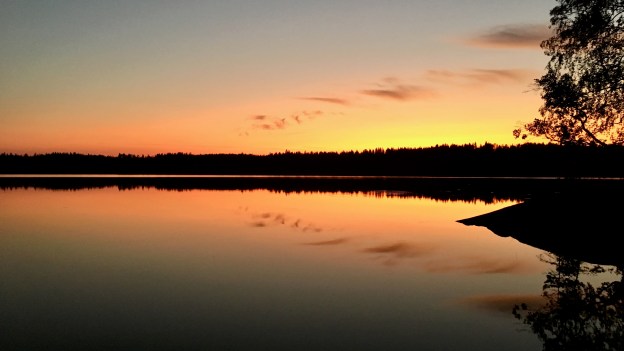
My mind just decided to take a break. Not even the sunset (which was beautiful in hindsight) could move me to have an opinion. It was almost startling.

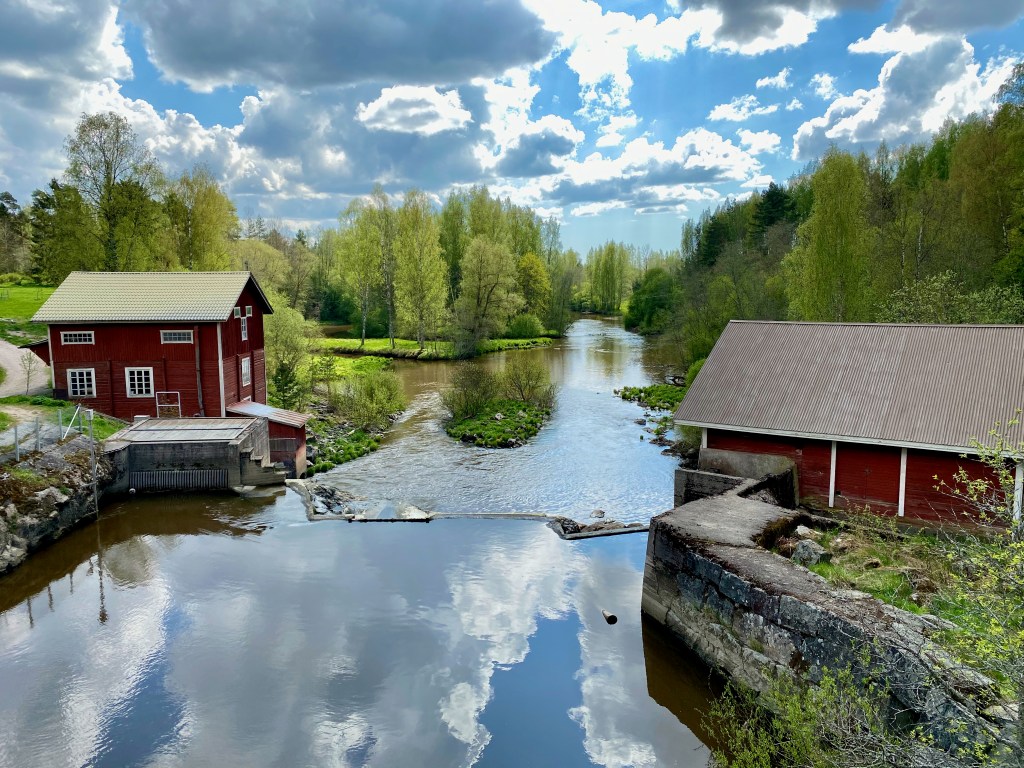
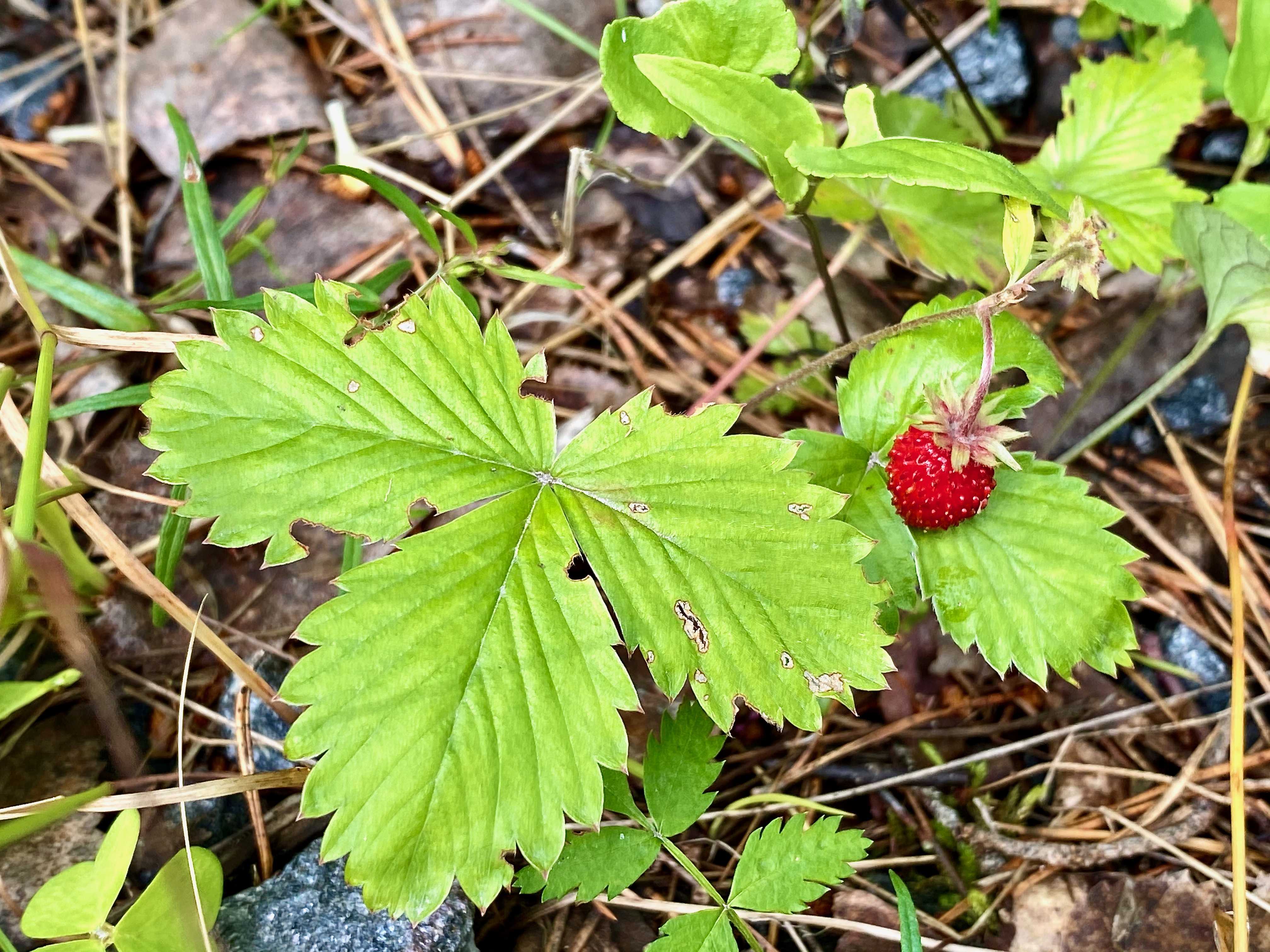
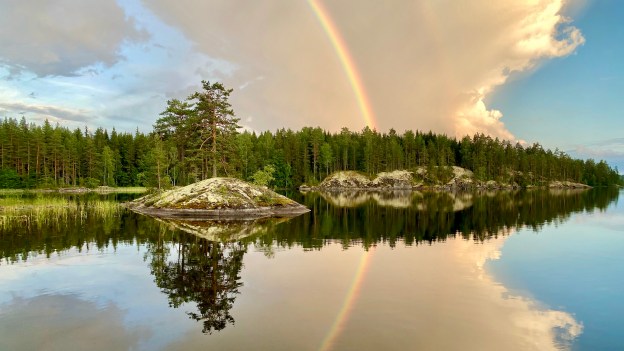
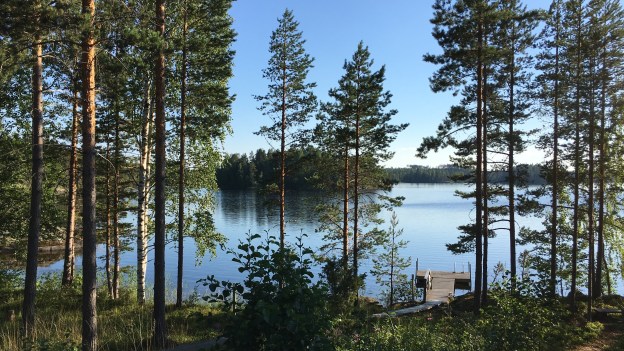
There we sat at our cosy dinner table, my partner in life and I, watching the sun set over “our” lake. We had bought, prepared and eaten early potatoes, all sorts of vegetables, and muikku (a.k.a. vendace, a species of freshwater whitefish); all straight from nearby farms and lakes. We had topped our meal off with delicious, just-picked strawberries. We were well-fed and well-rested.There was no need to think or speak. We just cherished the moment with our minds blank in the best possible way.

The war in Ukraine, climate change, Finland’s entry into Nato, the latest coronavirus news, the rising inflation numbers and interest rates, the promise of a cold winter with insufficient heating due to gas supply issues, recession speculations, rise of populism, not to mention the never-ending power struggle between the superpowers – nothing – not a single opinion on any of these was forthcoming.

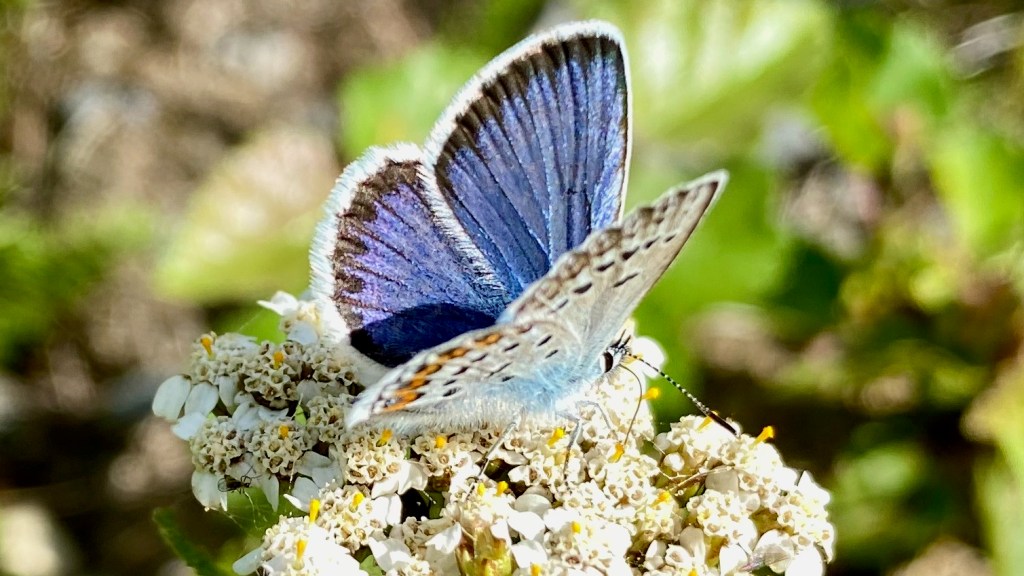
Moments like this are as fleeting as butterfly stops. I hope you have had a chance to enjoy a few of them amidst all that is going on in the world.
Reality has a tendency to catch up with you, whether you wish it or not. My favourite newspaper made sure of that. It provided me with an in depth article on all the crises looming in the horizon. The list seemed endless: debt crisis, housing market crisis, commodity crisis (including but not limited to energy crisis), Euro-crisis, China- crisis (political and financial), and a recession for the history books. All of this on top of the war in Ukraine.

Reality even invaded our balcony as we returned to Helsinki from our holiday refuge. Instead of butterflies, we could count helicopters on the deck of USS Kearsage, a 257 m (843 ft) long, nuclear powered Wasp-class amphibious assault ship that slowly slipped past us into the port of Helsinki.

Talking about wasps: I sent one of the photos above to a friend. His answering text said it all: “Not half as scary as Nancy Pelosi”.

To a political outsider Pelosi’s trip to Taiwan looked like she was stirring up a hornet´s nest that might just create the butterfly effect that puts us en route to chaos. There is a time and place for everything. The whys of this particular trip remain obscure.

Pelosi has had an impressive career. Does she really need to top her CV with “Started World War III”? To paraphrase an old saying : With friends like this, who needs enemies to feel unsafe.

To continue with sayings: Life truly is like a box of chocolates. Over and over again you bite into something sugar/chocolate-coated without really knowing what you will find inside. My first taste of Nato tells me that I will probably not love it, but I will still keep it on the menu to ensure that I get enough sustenance to survive.

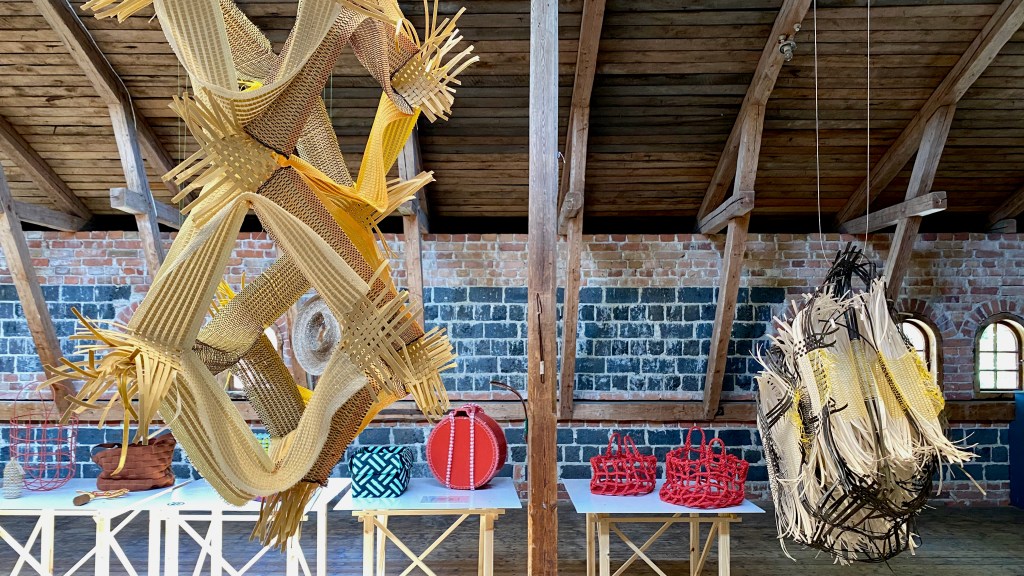
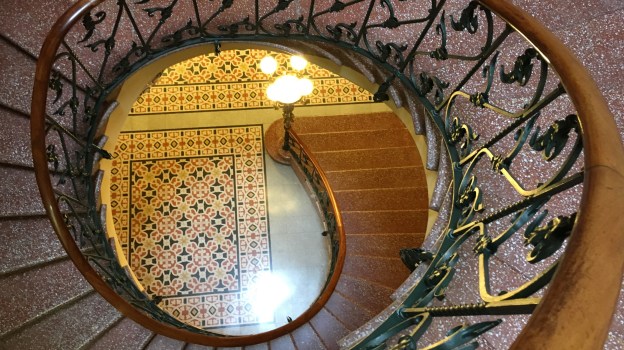
Chocolates come in many forms. Often the surprises they offer are delightful. While Pelosi was traipsing around Taiwan, we went to Fiskars; a picturesque village in Southern Finland known for combining design, art and architecture in a unique and inspiring way.

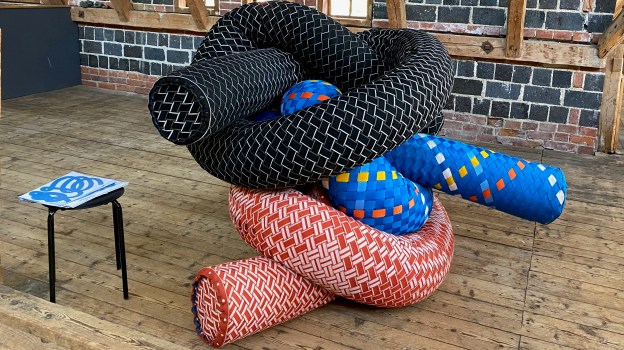
Pelosi and reality were once again forgotten, when we browsed the exhibition “U-joints: Knots&Knits”. U-joints is an ongoing research project and exhibition series by Andrea Caputo and Anniina Koivu. The exhibitions examine the functional and aesthetic relevance of this crucial design component.

Knots and Knits is the fourth chapter of the project. The exhibition was a piece of art in itself as well as in its details. It gave the viewer a new perspective on design.
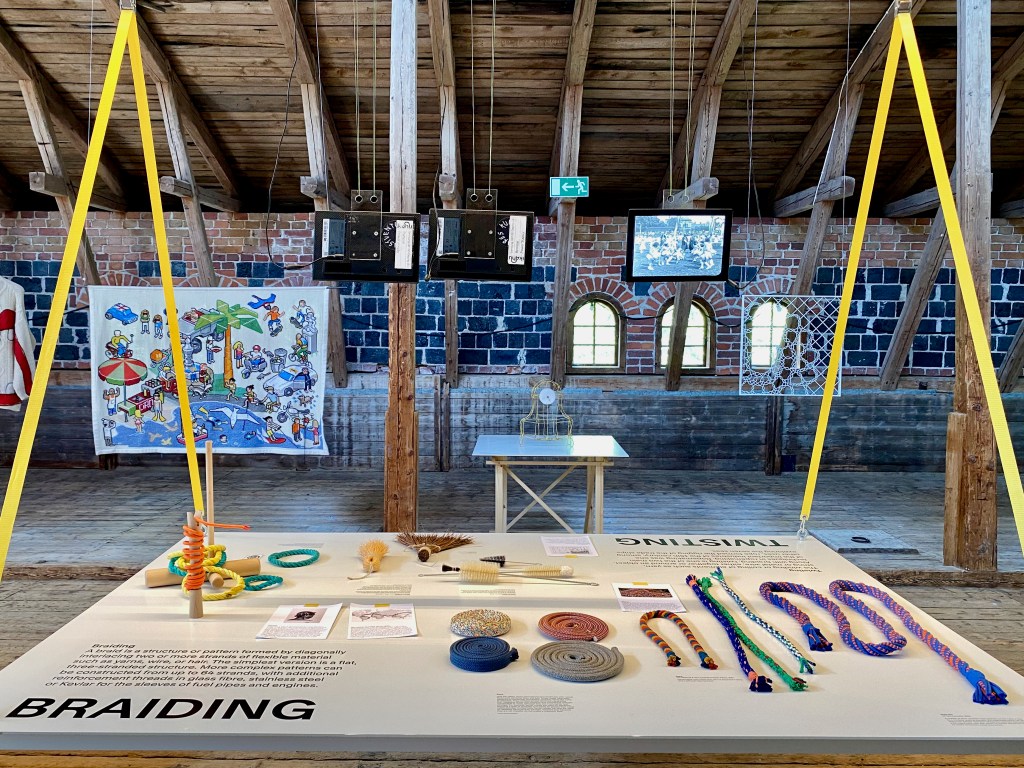
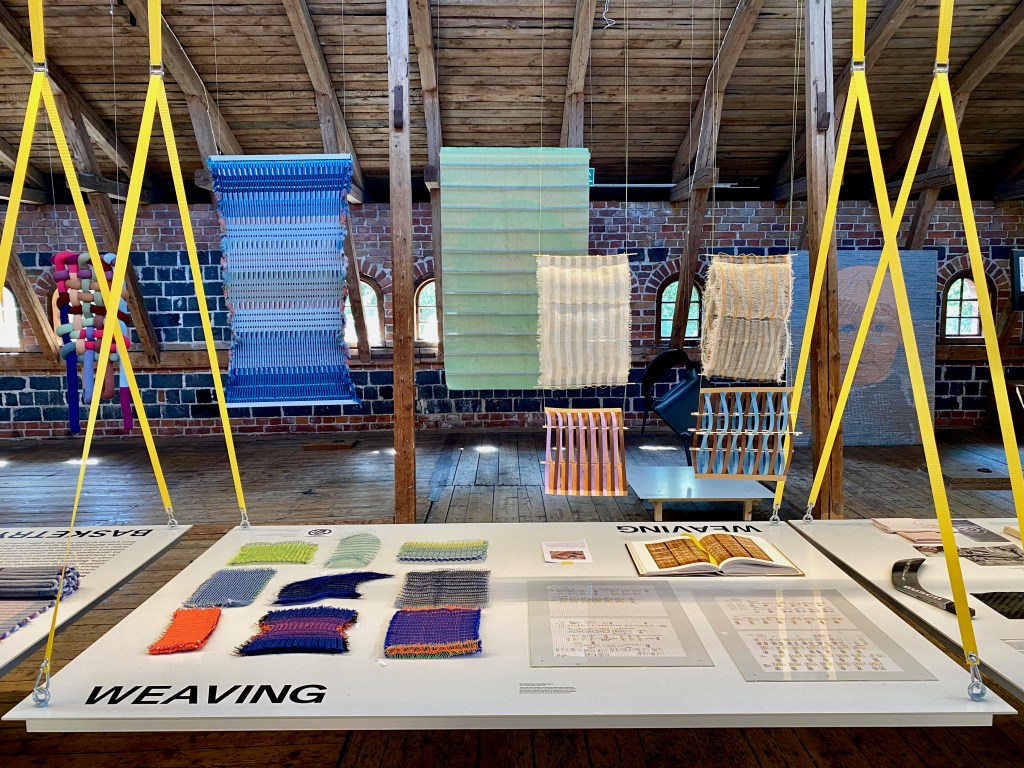
I leave you with this thought: We may have managed to tie our world in knots, but hope still remains that we can continue to knit something beautiful out of it. Just look at all the ingenious things we have designed so far.
Doom-doom-doomers

I address my message today to the Terrifying Triplets, the authors of present day doom and gloom – not only in their respective superpowers but worldwide. I am not referring to the pandemic. I give the Triplets the benefit of doubt on that one. I am talking about the games they play with people’s lives.

Hey, doom-doom-doomers, please put some ice in your hats and cool it. Let’s not get crazy – or rather, let’s not get any more crazy.

To summarise the mess that the doomers have made so far:

Trump, America’s Darth Vader, managed to slice his country in two with his laser beam of alternative facts and bullying. While he was at it, he sliced a big chunk off the base of Western democracy and made us question its survival; trust and human decency were suddenly in short supply. Now he is trying to claw his way back into the presidential game.

In the meantime, Xi Jinping has been busy doggedly enacting Orwell’s 1984. After perfecting his mind control- surveillance- social engineering strategy on his test site, the Uighurs, he has been slowly rolling out the concept to all of China and is now ready for worldwide expansion.

It is understandable that Putin has felt a little bit left out. No to mention the fact that others have been picking on him. The Ukraine mess is not of Putin’s making alone. This may partially explain why he has gone into full Peter the Great mode. Traditional war is so old and out, but you use what you have, when trolling and cyberattacks alone won’t do the trick.

Seriously doomers, why are you wasting your energy on bullying, trolling and outright war, whether physical or virtual.

Any strategy adviser worth her or his salt would tell you that you should tend to your existing portfolios and turn around present businesses, not spread your efforts to markets, where establishing yourself will cost you dearly, only to result in failure.

While you are at it, beware of halving your portfolio as Trump did.

The first thing a strategist learns is that you need to understand the market. Is it worth the effort? Then you look at the business. What is key to market success: the people, the IPR:s, the technology (be it software or hardware), or other immaterial or physical assets? Can you hold on to those assets? Can you add value to the business? Can you scale the business? What about the culture? What obstacles will you face upon integration? Is it all worth the price you will have to pay?

As I am not that familiar with the ins and outs of other countries, I will take Finland as an example. Finland is very much a people business. The country has survived mostly on brains and Finnish ‘sisu’. The latter translates into strength of will, determination, perseverance and acting rationally in the face of adversity.

The market is small and the business is not scalable.

A hostile takeover would not end well in this case example. Even niceoldladies would turn nasty overnight. The end result would compare to the acquisition of a thriving consultancy business at a high price, only to find that the consultants you paid so much for are now fully committed to undermining your business efforts any which way they can.

Not-so-dear doomers, you should be focusing on sustainable organic growth rather than costly growth by acquisition. You should be cleaning up your political closets, tending to the needs of your people and addressing the crucial question of climate change.

As you, my readers, have noted by now, this is not a blog about the video game Doom. Some of you may even have noticed that I am paraphrasing Finland’s Prime Minister Sanna Marin in my headline.

Pre-Omicron, Ms. Marin and her husband were caught clubbing with friends and acquaintances. Contrary to British Prime Minister Boris Johnson’s partying that is presently making the headlines, Marin’s clubbing was – at the time – fully in line with the COVID restrictions placed on Finns in general, albeit not fully in line with the added restrictions placed on cabinet ministers. Hence Marin’s political opponents and the media had a field day criticising her and dubbing her ‘the party princess’.

Normally the clubbing incident would be history by now. However, Marin unwittingly made it unforgettable at one sweep, when she tried to put a stop to the discussion on Instagram. The text of her post read: “Hey, boom-boom-boomer, put ice in your hat and cool it.” Needless to say, the post was not well-received by Finnish boomers.

Despite being a boomer myself, I was fine with the not-too-wild-at-all clubbing, but the Instagram post made me question Marin’s political acumen. The incident, once again, proved that prime ministers should not personally tweet or post on Instagram.

Not that Mr. Johnson did any better, when he tried to brush off the matter of the Downing Street party that broke the COVID lockdown rules by stating: “Nobody told me that what we were doing was against the rules.” Seriously man, is that really the story you want to go with? Who do you think is in charge of setting those rules?

Both PM:s were clearly off their game during these incidents. But the thing that strikes me as worse is all the petty politicking and scandal-mongering that was – and still is -taking place around matters like this. Leaders have enough on their plate these days. Let’s keep our eye on the big issues.

You might think that this blog post is prompted by Russia’s present warmongering. You would be right and wrong. It is just part of the picture. The spreading of doom and gloom has been going on much longer. First we saw the tip of the iceberg, now the bulk of it is slowly coming into view.

The Terrifying Triplets are dinosaurs, who have lost themselves in dreams of past and future glory instead of addressing the everyday needs of their people.

Leaders with untenable strategies inevitably find themselves in a position they never sought: Sailing off alone towards the final sunset.

One can only hope that we don’t end up on the brink of extinction before these present day dinosaurs sail off and give the world a chance to do better.

A moment of hope in Alicante

It happened early in November 2021. For a brief moment, life was sunny and filled with hope. The world seemed to be moving back towards a state of tentative normalcy.

The COVID Omicron variant had yet to surface. Putin had yet to ramp up his rhetoric regarding Ukraine and NATO to its present levels of aggressiveness. China’s ruthless trade war against Lithuania, an example of Tianxia in practice, had yet to make the Finnish news. Even Trump was laying low in terms of international visibility.

Less than two months later, we are back in the cold, be it in terms of superpower politics, COVID statistics or the weather. Finland and Finns are feeling the chill acutely on all fronts.

Let’s, however, focus on the positive. Join me on a trip back in time: to November 2021 and sunny Alicante.

My partner in life and I have long had the habit of heading for sunnier shores in November; a habit that was cut off by COVID-19 last year. This November we finally felt safe enough to pack our bags and take off again. It was our first trip abroad since February 2020, i.e. since ages ago.

On an airport you often feel slightly disconnected from the world. This time the disconnect was greater than ever as we found our way from check-in to our departure gate. Mask-faced crowds marched to-and- fro all around us, dragging carry-on bags along the endless airport corridors like industrious, faceless ants.

We had prepared diligently for our trip. Our vaccinations were in order, our EU Digital COVID vaccination certificates were accessible from all devices, the digital forms required by the Spanish government had been filled well in advance in the app provided, printed copies of all documents were packed into every bag, and we had enough masks to travel for a month instead of the ten days we planned to stay in Alicante. Our chosen hotel advertised many COVID safety measures, including the obligatory use of masks in all public spaces.

In other words, we landed in Alicante in full COVID mode.

For those, who are as unfamiliar with the city as we were upon arrival; Alicante is a historic Mediterranean port. It is the capital of the province of Alicante, which in turn is a part of the Valencian community. The population of the city itself is close to 340,000. Both in terms of atmosphere and location, Alicante is in between its southern counterpart, Malaga, and its northern counterpart, Valencia.

Before the pandemic, Alicante would have been nice but nothing out of the ordinary. Now everything felt new and interesting as we slowly woke up from our COVID-induced hibernation.

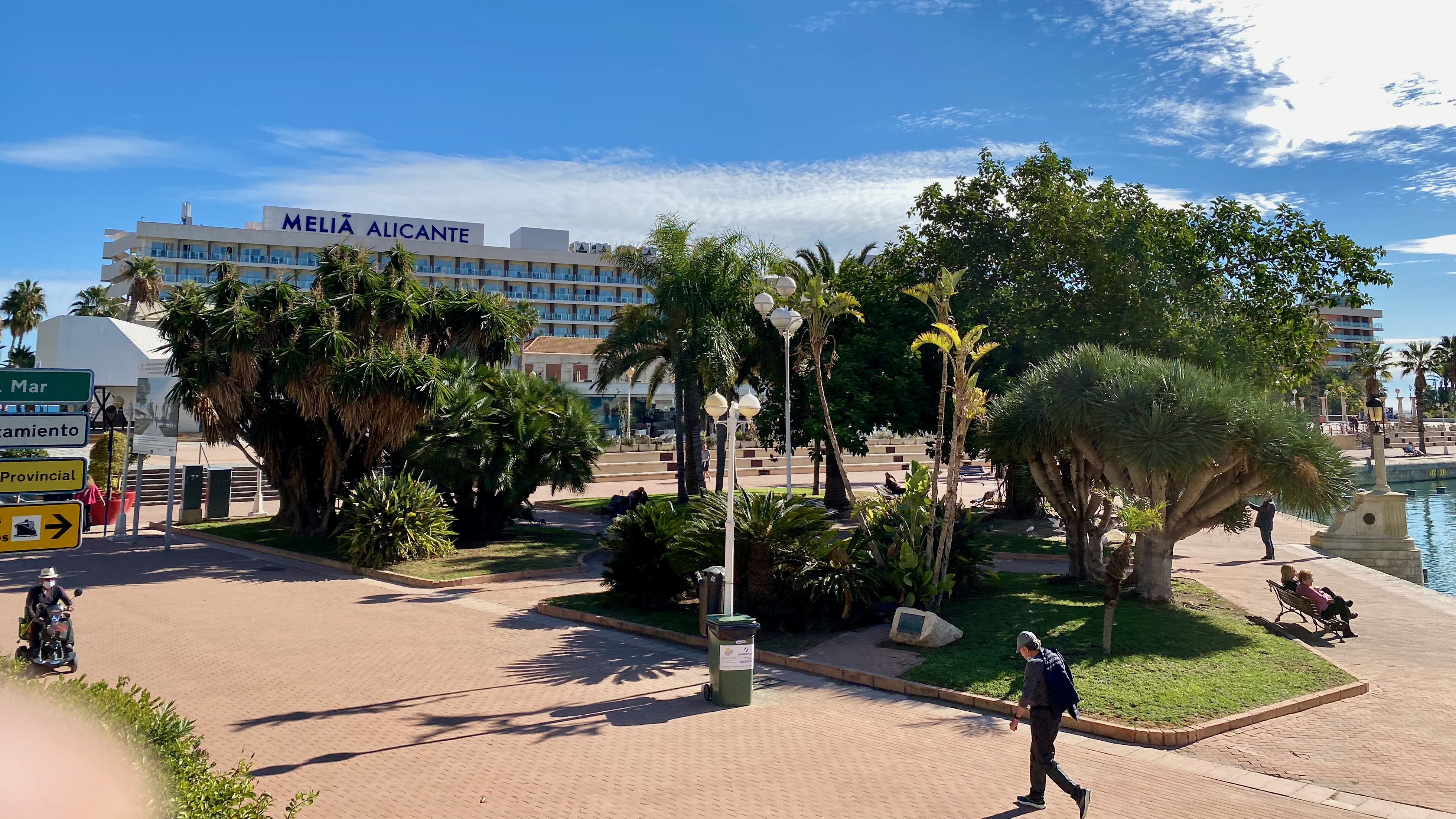
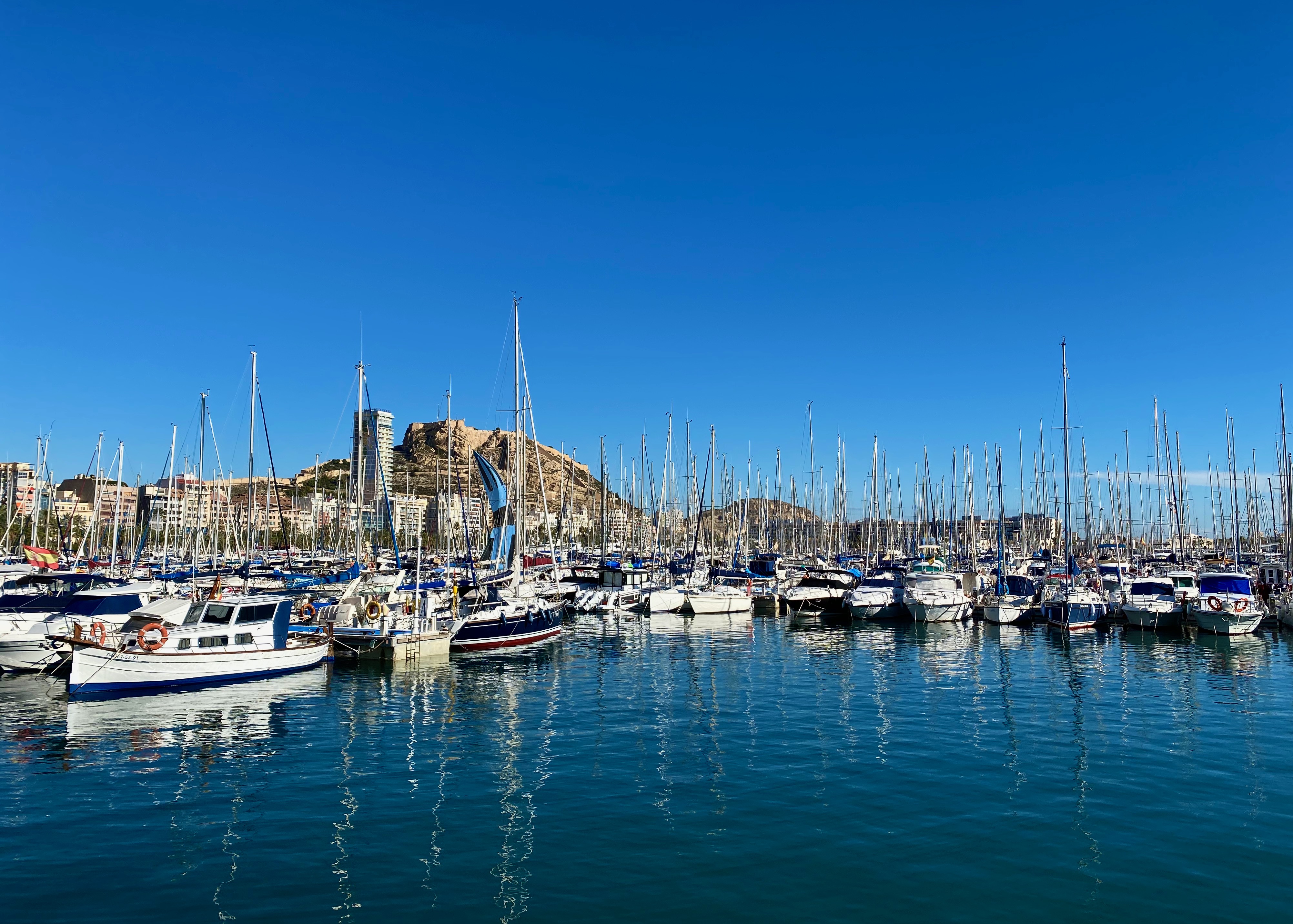
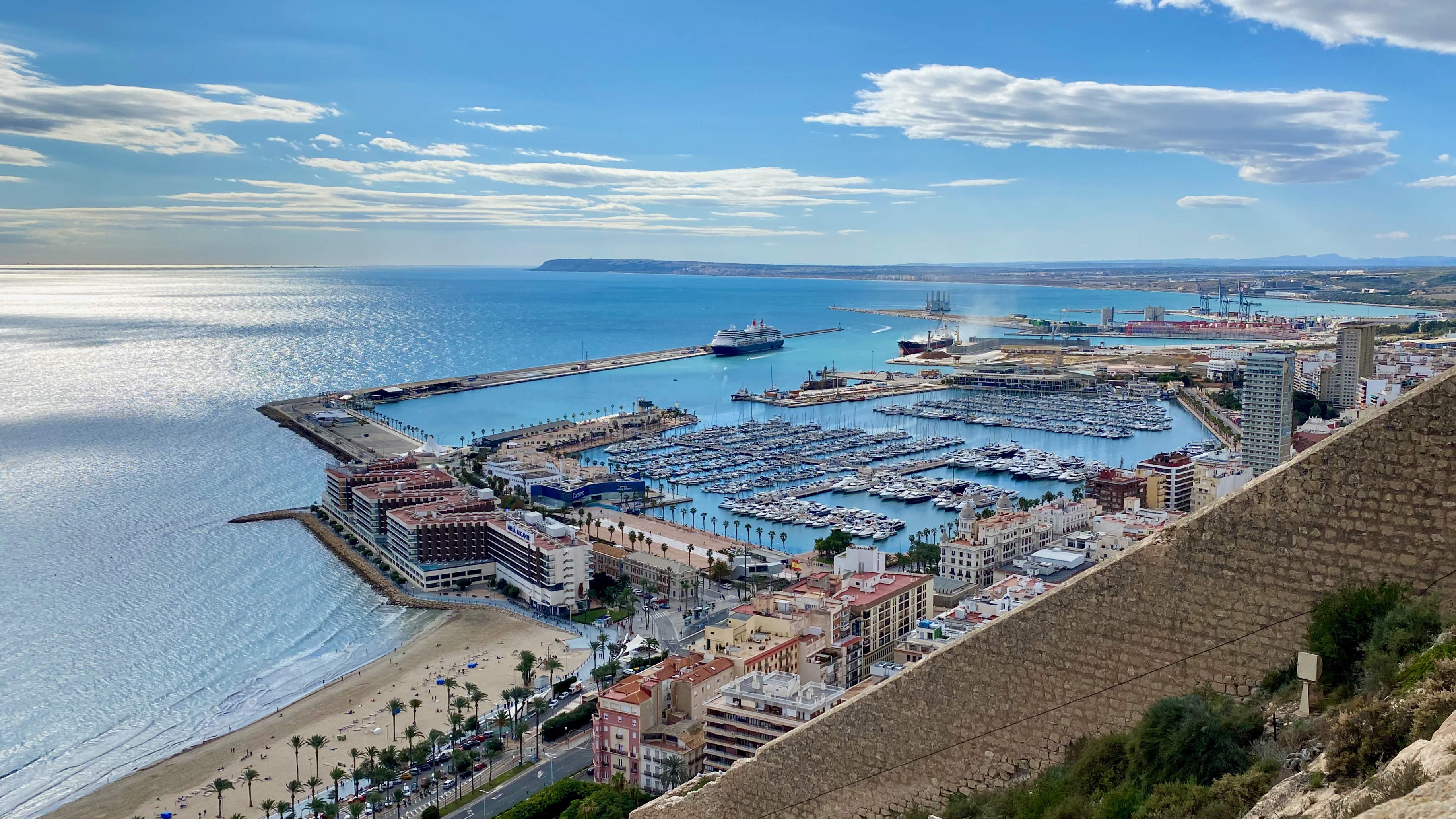
Granted, pandemic or not, I am hard put to find a hotel as conveniently situated as Melia Alicante, which sits between a nice beach and a scenic yacht harbour, has a bona fide historic castle looming above it, and still remains within walking distance of everything you might want to see or do.

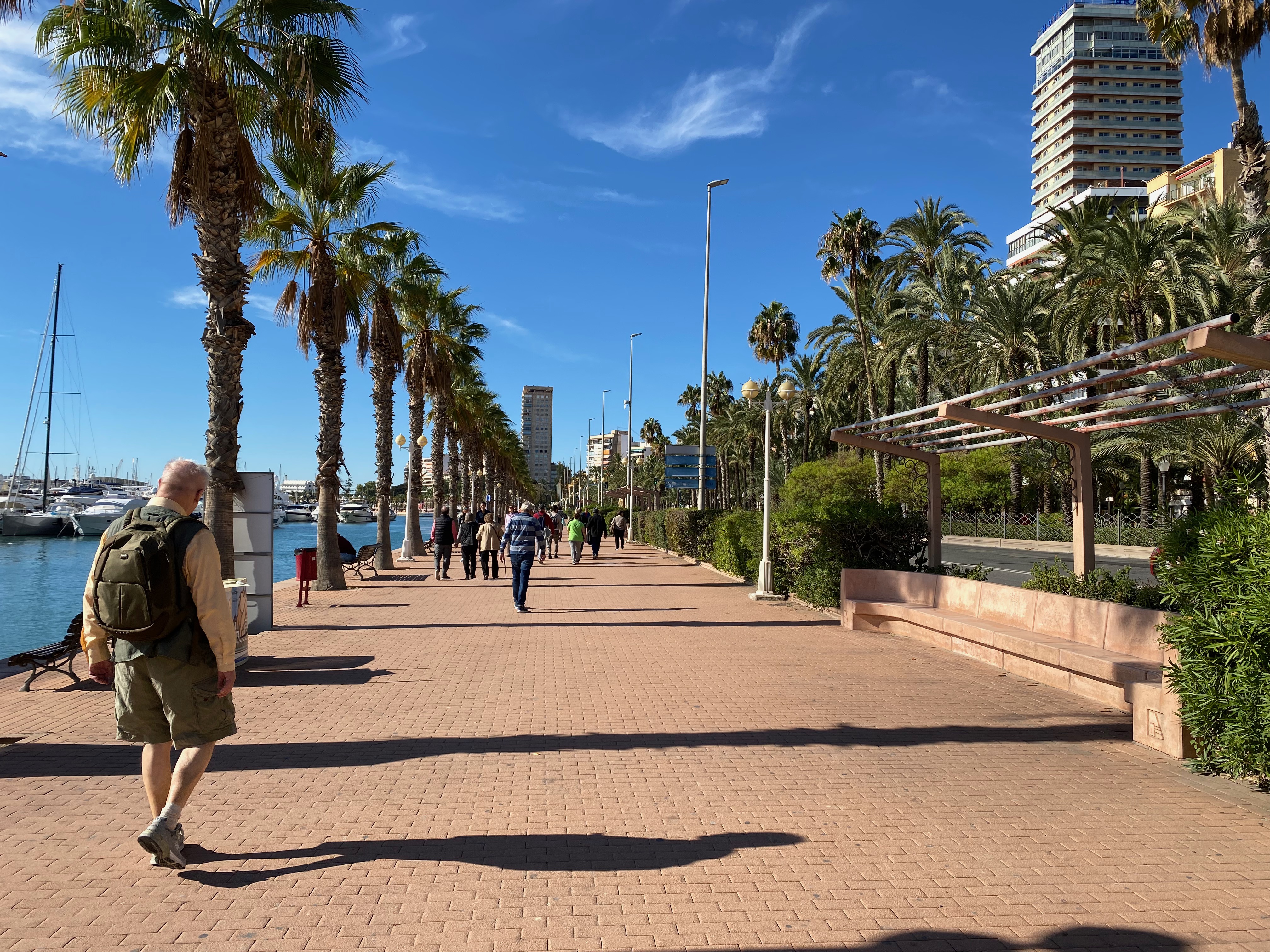
Even though the COVID situation was good at the time, we preferred to skip public transportation. Alicante is eminently walkable. We took a taxi only when coming and going to the airport and travelling to nearby Elche to see its multiple palm parks.

Due to our sailing background, the Ocean Race Museum was a must-see for us. It tells the story of the Ocean Race, formerly known as the Volvo Ocean Race and originally called the Whitbread Round the World Race. This globe-circling yacht race was first held in 1973.

The museum is – probably somewhat unintentionally – a quick crash course in how our lives have changed since the 70’s due to technology. It highlights the technological advances that have taken place in multiple areas, be it e.g. weather forecasting, navigation, communication, design, materials or construction. It shows us how the speed of everything has accelerated and underlines the fact that the skill sets needed to compete successfully have changed fundamentally. 

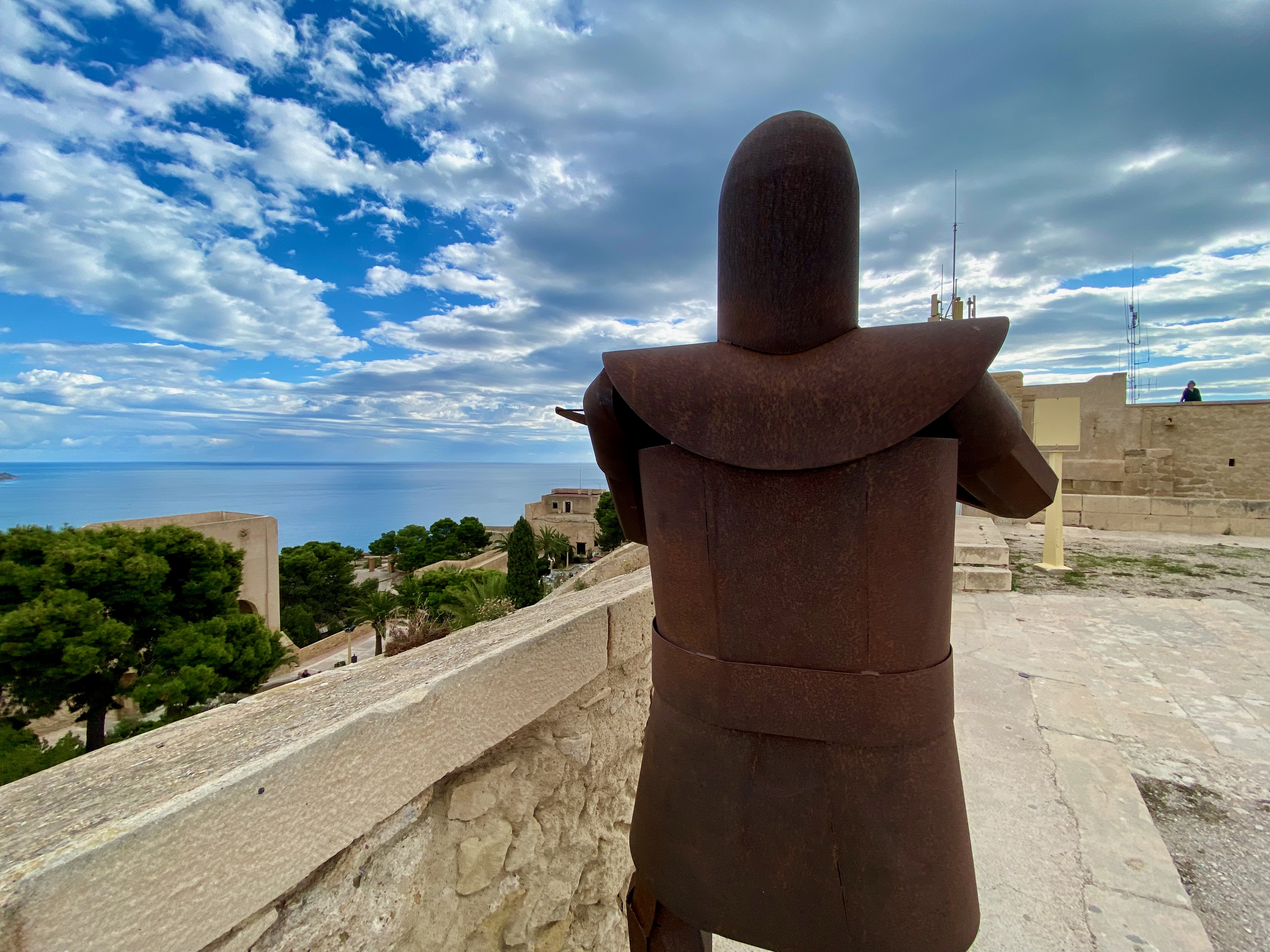
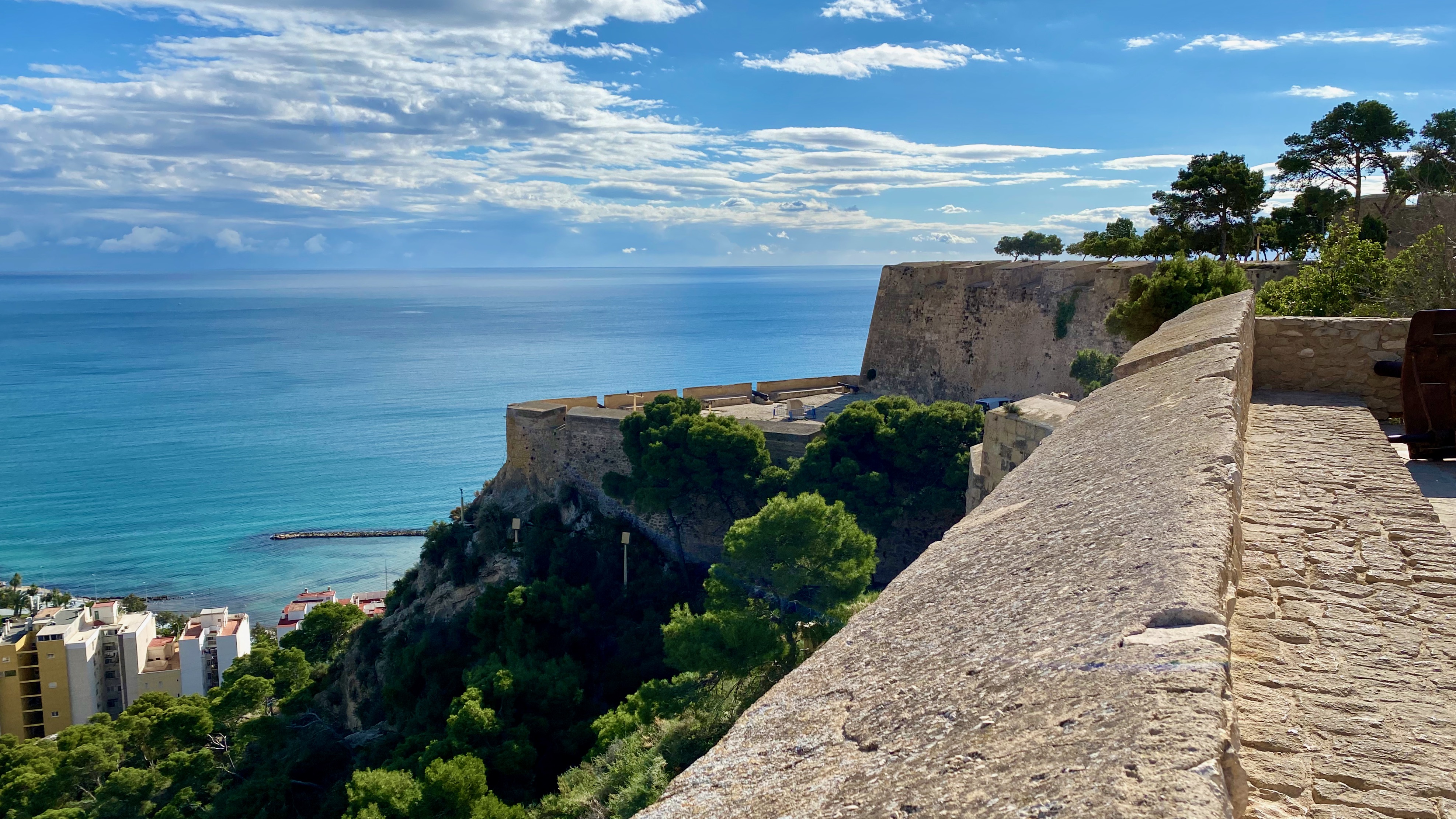
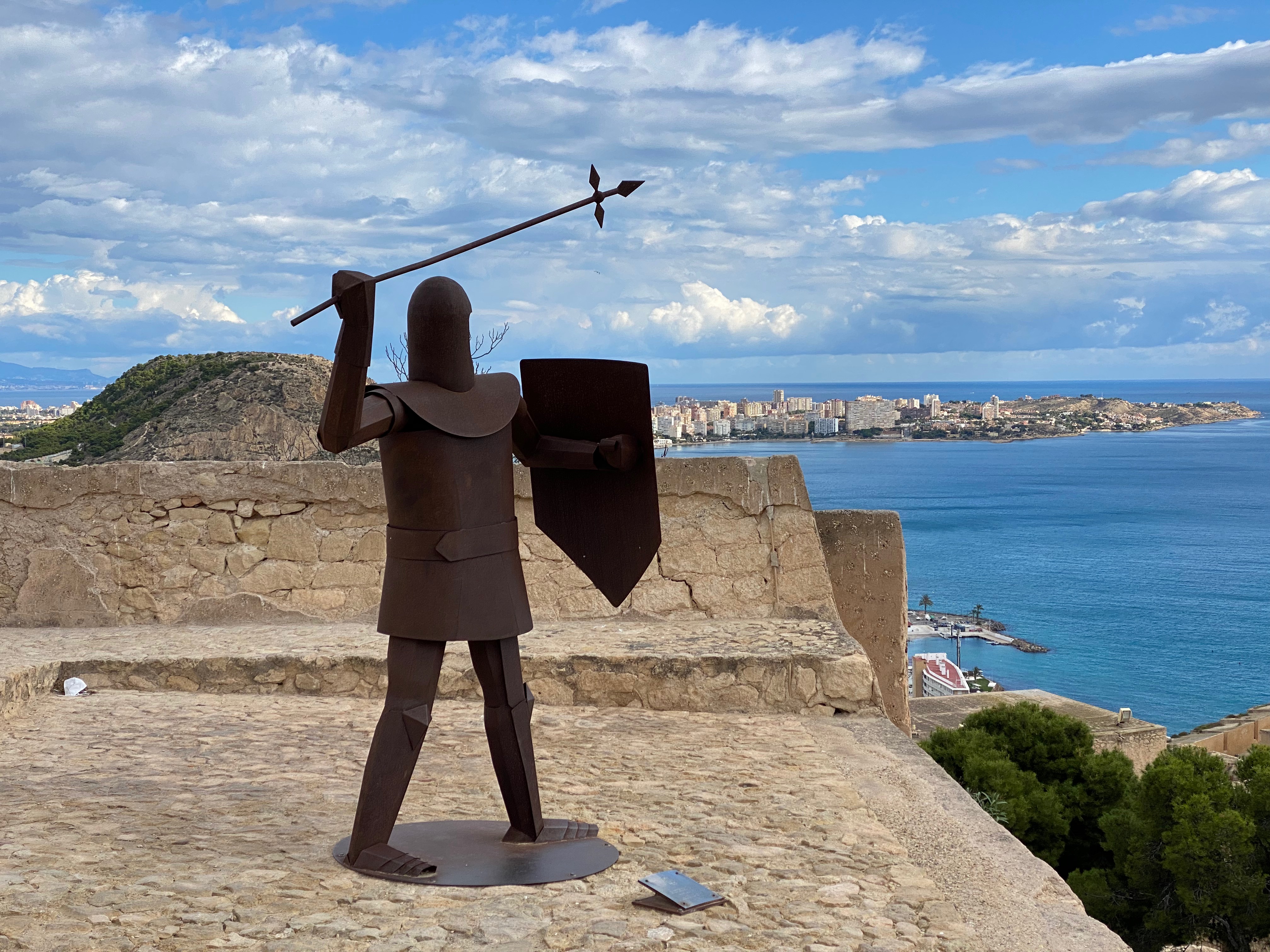
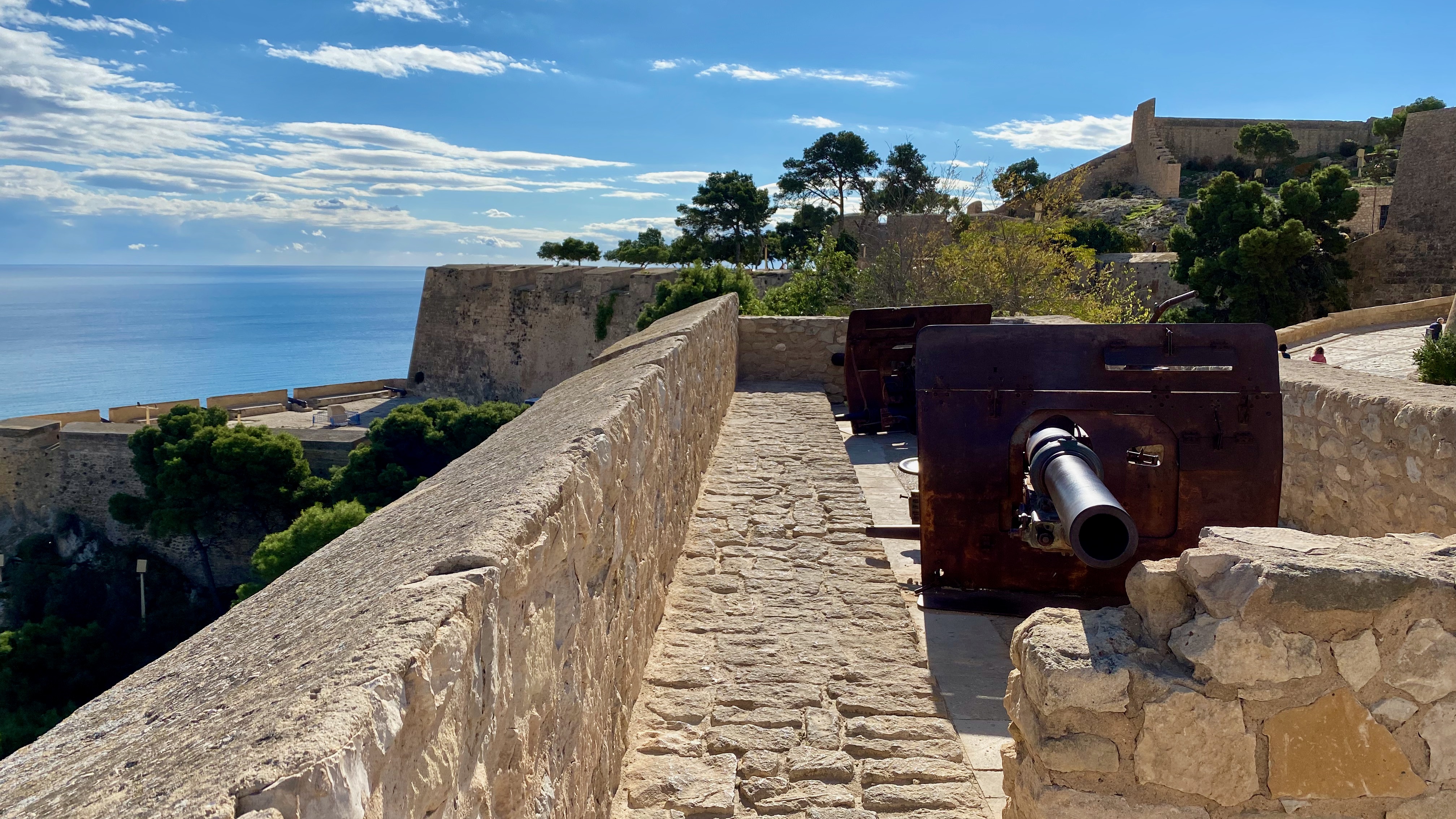
A must-see for all Alicante visitors is Santa Barbara Castle. The castle area itself is interesting and the views are to die for in good weather. The castle’s history goes back to the 9th century. It was recaptured from the Arabs in 1248 on the feast day of Saint Barbara.

The castle elevator at the floor of the mountain was closed due to COVID, one more  reminder that times were not fully back to normal. It proved to be a blessing in disguise in our case. There are many scenic routes to the castle. Walking up and down is definitely worth the effort. 

To summarise our moment of hope in Alicante: For a small moment, life was back to nearly normal. Skies were blue, the sun was shining, and we were out and about pretty much like on any other trip: enjoying sights, delicious meals and some really good wines (Alicante has some surprisingly good restaurants) in a cocoon of perceived safety. At the end of each day, we were lulled to sleep by the sound of waves hitting the beach in front of our hotel.

We had arrived in full COVID mode and departed ten days later in a state of relaxed hopefulness.

I keep going back to this moment of hope in my mind and take comfort from it amidst the cold, which is why I decided to share it with you.

There is a Finnish saying, “Paistaa se päivä risukasaankin”, which translates into “The sun will shine into a pile of brushwood too”. May the sun shine into your pile of brushwood, wherever it is – as it did into mine for a moment in Alicante.

Leaders and followers

Important fights are being fought today – and have been fought throughout history – in the name of social, political and economic equality. Many of them for causes that I support; not only with words but with actions.

However, being a niceoldlady and an old school liberal, I have a tough time buying into some of the fighting methods. All too often the fighters are so caught up in the righteousness of their cause that they are intolerant in the name of tolerance, harass in the name of non-harassment and at times even call for glaringly unequal treatment in the name of equality.

To be clear, when denouncing calls for glaring inequality, I don’t mean calls for measures that can help minorities catch up with the head start that years of inequality have given those in positions of power. Sometimes such catching up can best be facilitated through measures that in themselves are unequal treatment including, but not limited to, quotas.

However, lines have to be drawn somewhere. Mine are drawn pretty much at the point where French writer Pauline Harmange proudly states: ‘Mois les hommes, je les déteste’, which basically translates to ‘I Hate Men’. This is not just a catchy title for her pamphlet as one might assume; it is the prevailing sentiment throughout her essay. The thinking being that you are allowed to blatantly hate those that have done you wrong, if you are in a minority.

Even if one were to buy into that theory, the problem remains that not all men have done Harmange, or women in general, wrong. Still Harmange feels free to profess to hate men in general. I am not into hating, but should I profess to hate something, it would be sweeping generalisations and hate speech.

Then there are those, who feel free to rewrite history and interpret past actions with total disregard for facts and truth just to prove their point. My favourite newspaper recently carried a major story on women as software engineers. To make a short story longer, the writer took all sorts of liberties both with facts and their interpretation.

As if gender equality wasn’t a good enough cause on its own merits, the writer saw a great conspiracy in the fact that Finnish card punchers in the early 1960’s and 70’s were predominantly female, while a majority of the early 70’s software engineers were male.

As one commentator pointed out, card punching (a computer-related job, which in itself required great concentration and careful execution, but had nothing to do with software engineering) was as closely related to software engineering as my online banking is. In order for the software to work properly, the inputted information has to be correct, but that does make the one who punches or types in the information a software engineer.

Instead of acknowledging this, the article writer sweepingly alluded that the female card punchers could be considered the first software engineers, and that the hiring tests for software engineers were different from those for card punchers in order to favour men. The fact that the jobs were totally different – hence the hiring tests were different too – did not fit into her storyline. Therefore it was disregarded.

The writer then proceeded to speculate that the use of the term software was related to the fact that the early card punching “software engineers” were women and hence the programs were considered easy to produce i.e. ‘soft’ as opposed to the term hardware, which referred to something difficult and hard.

And here I was, thinking that the use of the term hardware originated from the mid 15th century concept of small metal goods i.e. referred to the physical components of a computer.

The sad thing is that with less emphasis on proving a point by any means – right or wrong – and more emphasis on getting the facts right, the article would have been interesting. Instead, it became a sorry example of how a good article can turn bad and a good cause can be undermined by blatantly disregarding facts.

Finland was actually training both male and female software engineers as fast as they could be hired in the early 70’s. The real story to tell would have been, why the number of female software engineers didn’t increase in proportion to the early numbers. That story did not make its way to the surface past the alternative facts, so it has yet to be told.

Wrongs do not a right make. The spreading of hate and unreason – or just alternative facts and untruths – do not promote equality; they promote hate and unreason as well as an increasing disregard for facts and truth.

Yet my favourite newspaper chose not to correct the story, but to argue that by reading the whole article a discerning reader would realise that card punchers were not software engineers, despite what the title of the article and the alternative facts presented in the early paragraphs of it claimed.

Since when did good journalism mean that the sorting of facts from fiction was to be left to the reader?

Social media has a tendency to make mountains out of molehills, but it also has the power to highlight wrongs that deserve our attention, yet they might never have come to our notice through old school channels. Most people recognise that things may be blown out of proportion, or less thoroughly researched, on social media sites. Which is why it’s so important that traditional media continues to take a more factual and in depth approach.

Originally newspapers where just that – papers with the latest news. With the growth of electronic media as well as the internet and social media, newspapers didn’t have the means to keep themselves in the forefront as news breakers. Instead, they focused on the context and the background of news.

Today social media darlings with little or no journalistic background are invited to write for newspapers in order to keep up with times and win over the next generation of readers. Unfortunately, fact-checking seems to be the first to suffer from this development.

Why give up your true competitive advantage? In addition to its adherence to time-tested journalistic ethics and standards, the reliability of its fact-checking process has so far been the true value-added of my favourite newspaper. Both are missing on social media.

Life is messy. Life is complicated. Life is seldom Instagram-ready or Twitter-formatted. Social media can serve as a podium for all sorts of voices: from silly to wise, from scary to nice, from hate to love; but we still need the context and the background.

A good newspaper is all about getting the story right and interesting enough – not about making sure it’s catchy and instantly trends whatever the cost. There will always be leaders and followers. A good newspaper does not let itself fall into the latter category as times change. It finds new ways to build on its competitive advantage instead of eroding it.

App attack

I am under attack. My life has been taken over by apps. Whether I am entering my home, calling an elevator, banking, buying, or using products and services; everything is “conveniently” handled through apps.

Continue reading

Killing me softly

Enough is enough. I’m okay with everyone and their uncle tweeting about matters that I couldn’t care less about, but I don’t want my Prime Minister to tweet in the midst of the coronavirus crisis. More importantly, I hate the publicity the government is giving me. Continue reading

Unmasked

In the midst of the coronavirus pandemic, Finland walks unmasked. As more and more countries demand that masks be worn in certain situations, Finland “is studying the issue of mask use in the care of the elderly”. Continue reading

Beyond COVID-19

I have tried to peer into the horizon and picture the world post the COVID-19 crisis. My mind lets me down time and again. My thoughts swing wildly between “this is just a short term crisis” and “this will change the world forever”.  I am not alone. Continue reading

In search of hope

Two political beasts met up in Helsinki this summer. It was  time to evacuate. Sometimes you just have to take time off from everything. My partner in life and I decided to travel. Our first stop was the lake district of Central Finland. Continue reading