Tag Archives: Journalism

#democracy too

We all know there is no such thing as normal people or normal actions. No two normals look alike. Your normal looks different from mine.

Still, I feel confident in my statement: Normal is out. We are bombarded by so much information that it takes something beyond our own concept of normal to drag our attention away from our comfy interaction with like-minded people in our chosen information silos; the ones provided by courtesy of the Chinese, Elon Musk, international investors or local media providers.

All too often it takes something negative to catch our interest.

In a media overload world, a happy life is seldom interesting unless it involves a mind-boggling rags-to-riches story or is achieved after serious, preferably health-threatening, setbacks. Great grades and a stellar job record do not a good story make. Ruining your successful career spectacularly – now that is clickworthy. Genders are interesting mainly if there is an internal or external struggle or an equality issue involved. Faith is newsworthy if it involves celebrities or leads to violence or oppression rather than good deeds.

If you want to be heard, make sure you are not too normal, whatever that means in your target group. You can opt for a memorable hair style like Boris Johnson, an interesting age gap marriage like President Macron and his Finnish counterpart, Niinistö, or you can ride the minority van, with skin colour, gender or sexuality as your strength. Unusually good or bad looks never hurt either.

Actually, any of the above alone may not make the cut these days. The world is looking for something more – and more – whatever that is.

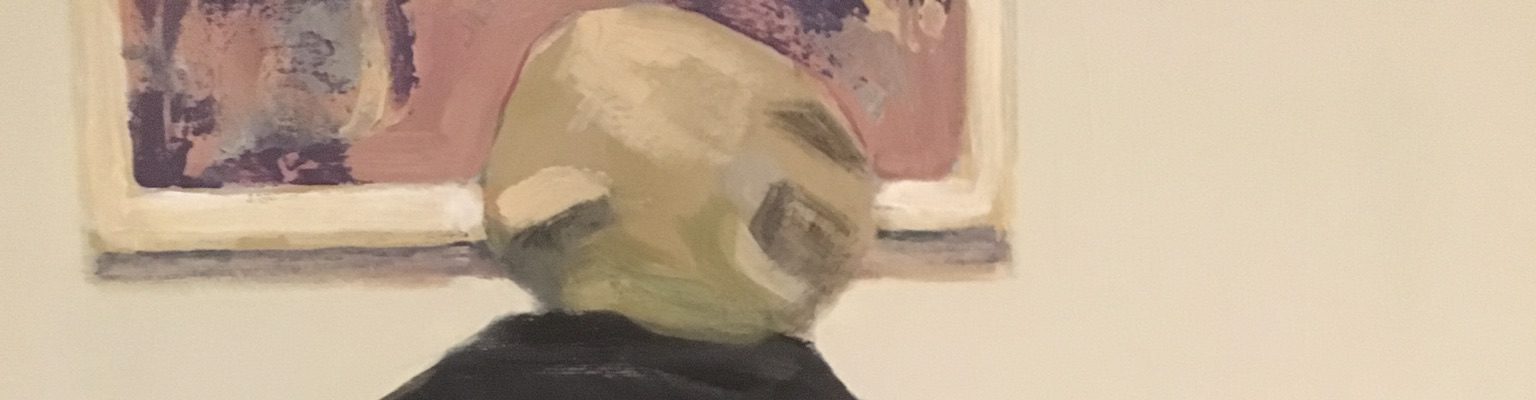
Even a fish has to be quite out of the ordinary to grab our attention. Hence my featured image, which also symbolises my take on the effects of social media. It’s an ugly picture.

No wonder everyone is out there riding their own “ism” be it fanaticism, racism, or some other ism. Even Putin and Trump have realised that plain old crazy is not enough; you need to spice it up with wars, conspiracy theories and isms.

Sadly, my favourite news media, Helsingin Sanomat, all too often falls into the trap of letting social media algorithms take the driver’s seat, while HS takes the backseat with its semi-analytical follow-ups on the latest “talk of the town”. It’s the easy way out in search of clicks: Tailgate social media regardless of whether the issues trending on it are truly worth the coverage journalistically. It’s also the way to get caught up in warped agendas driven by social media savvy parties instead of doing your own thinking and legwork.

I am aware that I am crying for journalism as we have known it – and still know it, when my favourite news media is at its best. Things change. Maybe traditional journalism is fated to take the backseat. But why seat yourself there voluntarily?

As far as the Chinese are concerned, the more mindless the TikTok content and its followers become, the better. In China itself, TikTok is not allowed. Elon Musk, in turn, makes no secret that X is now his – to do with as he pleases – and rules do not please him. Social media platforms do not care a jot about fact-checking, good journalistic practices or democracy. They pose as a way to become heard, but their algorithms make sure that not everyone is. Why help them?

Our view of what is to be considered a fact may change as we learn new things. That is as it should be. However, thanks to social media, more and more people seem to be buying into the thought that facts are only a matter of opinion; just pick your own alternative fact and go with it, no proof required. The same trend seems to apply to the rule of law; if it doesn’t “work” for you, just ignore it and do as you wish.

As like finds like by courtesy of social media algorithms, fiction becomes fact to so many that no fact-checking can halt the process. Western democracies are slowly being trained to a life of panem et circences (bread and circuses). With AI in the mix, the stories will only get wilder and wilder and so will probably the voters along with them.

As the lines between possible and impossible, true and false, and right and wrong become blurred, it becomes increasingly tempting to vote for someone, who – ably aided by algorithms- sells you an exciting story and promises you both bread and the full circus experience. It’s such an easy solution: Just jump on the circus wagon, forget your troubles and doubts and hope for the best.

How did billions of people end up being led by their noses without protest? What about free will and independent decision-making? When did we lose this War Over Minds to evil algorithms? Is the damage irreversible? How far are we gone? When all is said and done, will our sense of real and unreal, true and false, right and wrong be totally lost?

The way things are going, we will vote ourselves out of democracy before we know it. For all the wrong reasons – just because we can.

The fight to save Western democracies starts at home. You may not have to risk your life in the physical sense, but you must be ready to make sacrifices that may feel life-changing. Leave your social media accounts – at least the ones that are clearly led by parties beyond all control. You will not beat them by joining them.

Let the fight begin #democracy too!

Wait – I realise I am not on TikTok, X, Instagram or Facebook. No algorithms will push this message forward. Then again, even if I was, would they really push it? You can see where this is going. It is, indeed, an ugly picture.

Leaders and followers

Important fights are being fought today – and have been fought throughout history – in the name of social, political and economic equality. Many of them for causes that I support; not only with words but with actions.

However, being a niceoldlady and an old school liberal, I have a tough time buying into some of the fighting methods. All too often the fighters are so caught up in the righteousness of their cause that they are intolerant in the name of tolerance, harass in the name of non-harassment and at times even call for glaringly unequal treatment in the name of equality.

To be clear, when denouncing calls for glaring inequality, I don’t mean calls for measures that can help minorities catch up with the head start that years of inequality have given those in positions of power. Sometimes such catching up can best be facilitated through measures that in themselves are unequal treatment including, but not limited to, quotas.

However, lines have to be drawn somewhere. Mine are drawn pretty much at the point where French writer Pauline Harmange proudly states: ‘Mois les hommes, je les déteste’, which basically translates to ‘I Hate Men’. This is not just a catchy title for her pamphlet as one might assume; it is the prevailing sentiment throughout her essay. The thinking being that you are allowed to blatantly hate those that have done you wrong, if you are in a minority.

Even if one were to buy into that theory, the problem remains that not all men have done Harmange, or women in general, wrong. Still Harmange feels free to profess to hate men in general. I am not into hating, but should I profess to hate something, it would be sweeping generalisations and hate speech.

Then there are those, who feel free to rewrite history and interpret past actions with total disregard for facts and truth just to prove their point. My favourite newspaper recently carried a major story on women as software engineers. To make a short story longer, the writer took all sorts of liberties both with facts and their interpretation.

As if gender equality wasn’t a good enough cause on its own merits, the writer saw a great conspiracy in the fact that Finnish card punchers in the early 1960’s and 70’s were predominantly female, while a majority of the early 70’s software engineers were male.

As one commentator pointed out, card punching (a computer-related job, which in itself required great concentration and careful execution, but had nothing to do with software engineering) was as closely related to software engineering as my online banking is. In order for the software to work properly, the inputted information has to be correct, but that does make the one who punches or types in the information a software engineer.

Instead of acknowledging this, the article writer sweepingly alluded that the female card punchers could be considered the first software engineers, and that the hiring tests for software engineers were different from those for card punchers in order to favour men. The fact that the jobs were totally different – hence the hiring tests were different too – did not fit into her storyline. Therefore it was disregarded.

The writer then proceeded to speculate that the use of the term software was related to the fact that the early card punching “software engineers” were women and hence the programs were considered easy to produce i.e. ‘soft’ as opposed to the term hardware, which referred to something difficult and hard.

And here I was, thinking that the use of the term hardware originated from the mid 15th century concept of small metal goods i.e. referred to the physical components of a computer.

The sad thing is that with less emphasis on proving a point by any means – right or wrong – and more emphasis on getting the facts right, the article would have been interesting. Instead, it became a sorry example of how a good article can turn bad and a good cause can be undermined by blatantly disregarding facts.

Finland was actually training both male and female software engineers as fast as they could be hired in the early 70’s. The real story to tell would have been, why the number of female software engineers didn’t increase in proportion to the early numbers. That story did not make its way to the surface past the alternative facts, so it has yet to be told.

Wrongs do not a right make. The spreading of hate and unreason – or just alternative facts and untruths – do not promote equality; they promote hate and unreason as well as an increasing disregard for facts and truth.

Yet my favourite newspaper chose not to correct the story, but to argue that by reading the whole article a discerning reader would realise that card punchers were not software engineers, despite what the title of the article and the alternative facts presented in the early paragraphs of it claimed.

Since when did good journalism mean that the sorting of facts from fiction was to be left to the reader?

Social media has a tendency to make mountains out of molehills, but it also has the power to highlight wrongs that deserve our attention, yet they might never have come to our notice through old school channels. Most people recognise that things may be blown out of proportion, or less thoroughly researched, on social media sites. Which is why it’s so important that traditional media continues to take a more factual and in depth approach.

Originally newspapers where just that – papers with the latest news. With the growth of electronic media as well as the internet and social media, newspapers didn’t have the means to keep themselves in the forefront as news breakers. Instead, they focused on the context and the background of news.

Today social media darlings with little or no journalistic background are invited to write for newspapers in order to keep up with times and win over the next generation of readers. Unfortunately, fact-checking seems to be the first to suffer from this development.

Why give up your true competitive advantage? In addition to its adherence to time-tested journalistic ethics and standards, the reliability of its fact-checking process has so far been the true value-added of my favourite newspaper. Both are missing on social media.

Life is messy. Life is complicated. Life is seldom Instagram-ready or Twitter-formatted. Social media can serve as a podium for all sorts of voices: from silly to wise, from scary to nice, from hate to love; but we still need the context and the background.

A good newspaper is all about getting the story right and interesting enough – not about making sure it’s catchy and instantly trends whatever the cost. There will always be leaders and followers. A good newspaper does not let itself fall into the latter category as times change. It finds new ways to build on its competitive advantage instead of eroding it.