Category Archives: Values

Dear America,

Would you marry someone, who has the mentality of a criminal? Someone you know to be a bully. Someone, who has been caught lying regularly. Someone, who breaks promises, agreements and laws as if they didn’t exist. Someone, who has no problem with outright blackmail or even violence, if that’s what it takes to reach the wanted results.

Would you hire such a person to work for you, or go into business with that person? Would you want someone like that as your boss or closest colleague? Would you want someone like that to befriend your children?

If you wouldn’t, why in heaven’s name would you elect a man, who fulfils all of the above criteria, your President? America, how did you let this happen?

This is just biased slander, you may say. Our President is a dealmaker, who will Make America Great Again. You have to break a few eggs to make an omelet, you might add.

Let’s take a step back. In fact, let’s go all the way back to April 4, 1949; to the day NATO was founded after World War II. The treaty itself was signed in Washington, and it has served your interests, America, from thereon. You entered the treaty because you recognised the threat posed by the Soviet Union to Western democracies. A threat that once again became evident as Russia unlawfully invaded Ukraine in 2022.

You do remember, don’t you, that Russia was the driving force of the Soviet Union and that Vladimir swore to Make Russia Great Again long before Donald entered the picture. Vladimir would love nothing more than to grab a bite of your NATO allies and preferably you too. Donald may see this as one of the many inconvenient details that he is a master at forgetting, but you shouldn’t.
It’s clear that Donald has fallen hard for Vladimir. Like attracts like. If it was only the two of them, I would wish them happy. They deserve each other. But Donald doesn’t represent only himself, he represents you too, America.

Everyone has the right to change their mind. Even in a marriage that has lasted 75 years as NATO has. But the parties still have a prenuptial agreement signed and sealed. Promises have been made, including the future aid promised to Ukraine.

Donald is now breaking your promises by the dozen. It is nauseating to watch as he withholds promised aid and intelligence support from a country that is fighting against an invader that NATO, with you in the forefront, has considered a common foe for the past 75 years.

Not to mention the way he harasses Greenland and the Danes. It is an example of bullying and greed at its purest: barely veiled threats and muscle-flexing to gain something that never belonged to you and that no one wants to give to you.

America, you have essentially elected your own Vladimir. Vladimir has invaded your thinking more successfully than he ever managed to do in Ukraine.

You may say that Russia is not something Americans should worry about anymore; it’s Europe’s problem. I disagree. Unless you are ready to give up on democracy? If so, who am I to stop you. But before you do, please ask yourself: Do I really want America to become like Russia?

Just as Vladimir has done before him, Donald is all set to extend his presidency past its present term and to remove the need for future elections. He is taking over the army, FBI and CIA as we speak; or at least making a determined effort to do so. He is making sure no one will investigate his or his friends’ doings. His “team” even ensured that bad cops are free from public scrutiny in the future. These are all facts. You can track the nominations and decisions online, if you don’t believe me.

The similarities between Donald bullying Canada financially and Vladimir attacking Ukraine physically are more than fleeting. Actually, Donald is taking it a step further; he is coveting land all the way from Greenland to Gaza.

The way he is going, he may even try to mess with the Fed, thus singlehandedly upending the world economy. Banking is based on trust. Seriously, who would dare trust a Fed guided by Donald’s capricious hand? The financial gain you seem to be focusing on is only a hairsbreadth away from turning into unimaginable losses.

I can understand that it is hard to face the facts. It is often hard to leave a spouse that treats you badly too. When bad things happen, you may tell yourself that this is just an aberration; that things will soon get better. Why would they? Does Donald look like a man ready to change? It’s time to face reality.

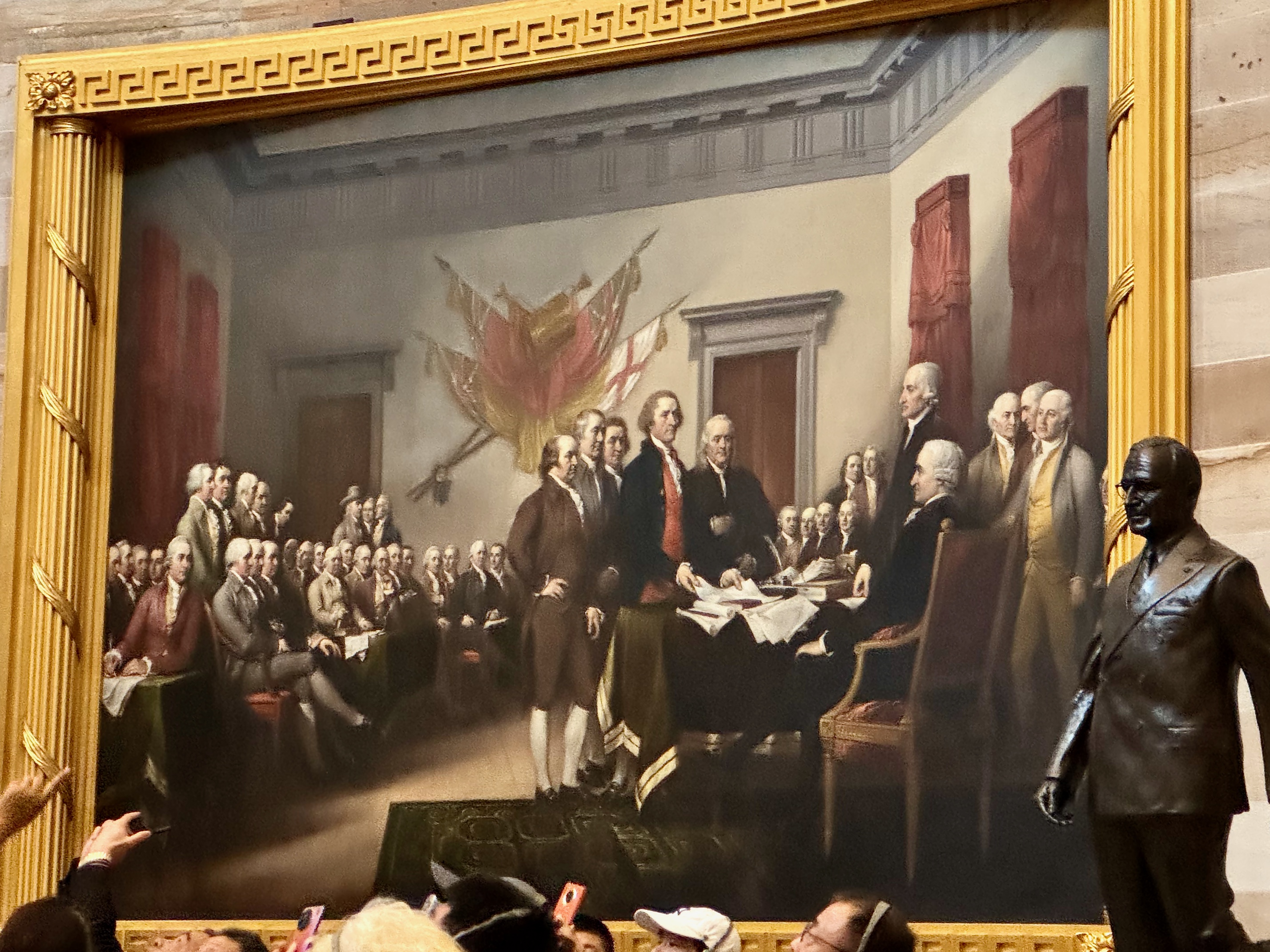
Is this what the Founding Fathers envisaged, when they signed the Declaration of Independence: Musk firing employees summarily, aid withdrawn without proper process, treaties and promises broken, allies bullied? Is this something they would have condoned? Were their ideals based on pure monetary gain – preferably their own?

You may say that America has paid enough. Europe has paid just as much as far as Ukraine is concerned. When one totals the military, financial and humanitarian aid given to Ukraine, the sums paid by both parties are close to equal. Assuming you are willing to use the real, documented numbers – not the ones dreamed up by Donald. The only difference is that Europe is still keeping the promises it made, while you are now breaking them.

Or maybe you just don’t care anymore? If so, that is your prerogative. I just wonder what life without trust looks like? I think you should too. Do you really want your children and grandchildren to grow up in an environment, where a criminal mentality is just fine as long as there is something to be gained financially?
America, when Ukraine finally sees peace, it will be at a cost higher than it should have been – all because of you. This became abundantly clear to the whole world, when JD and Donald bullied Zelenskyy in front of the media – demanding a thank you from him, while they were actively working with Russia against the Ukrainians’ rightful efforts to preserve their nation.

Just as they are working to get a real estate deal in Gaza. All in the name of peace.

America, it is time to update The Star-Spangled Banner. Let’s face it. You are not the “land of the free and the home of the brave” anymore. You are fast becoming the land of the greedy and the home of the bullies.
Using our power to make a difference

If you are into the concept of democracy, the world is going to hell in a handbasket. Those of us who might be in a position to make a difference, yours truly included, are too comfortable and lazy to do what it takes to safeguard democracy. Others have totally lost faith in their ability to affect political change.

Countries are up for grabs by leaders who are ruthless enough to ignore all rules as they forge on relentlessly towards absolute power.

The Russian people excel at outsourcing power. They have totally given up on the concept of making a difference. They do not see themselves as political actors. This “Putin has the power, makes the decisions, they have nothing to do with me” way of thinking allows ordinary Russians to go on with their daily lives without any concern for e.g. the war against Ukraine, the efforts to eradicate the Russian opposition and the discrimination of many minorities. According to the majority, it’s all Putin’s doing. They themselves have no say and therefore no responsibility.

Democracy is not dead in America – yet. However, unforgivably many politicians are too comfortable and too lazy to even try to make a difference although they could. The Republicans have all but outsourced their power to Donald Trump, who will grab it and twist it out of recognition. Despite this, many of them maintain that they have nothing to do with Trump’s outrageous behaviour. In addition, too many voters have lost faith in their ability to affect meaningful political change.

Will this laziness and loss of faith result in the loss of the unity, democracy and rule of law that their forefathers fought for?

Where is the EU, when all of this is taking place? It is slowly waking up to the fact that many of the world’s problems may spill over into its lap sooner rather than later. Unfortunately, EU members are no strangers to ignoring a problem until it gets out of hand. It’s the “too comfortable and lazy to react in a timely fashion” effect all over again.

At times, I feel like I am watching a political reality show that seems to be moving unstoppably towards a tragic ending.

The Chinese have always had an eye for playing the long game. I can’t help but admire the ingenuity of it, as I watch Xi Jinping meet key political players all over the world; creating expectations, hope, fear and overall confusion.

As the saying goes, when you realise you are in deep s…, don’t move. This is probably China’s goal: to ensure that as many players as possible stay put and just allow the long game to play out. By the end of the day, the rest of us will find ourselves in the position of bystanders. The force will not be with us anymore – we will have given it away.

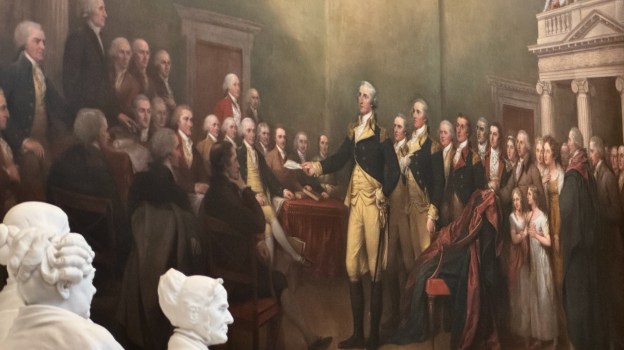
Giving power away is not always bad. My first image above is of George Washington surrendering his resignation as wartime leader; and thereby ensuring that the country’s future leader was decided by democratic vote. Something that an increasing amount of key world leaders are keen to avoid these days.

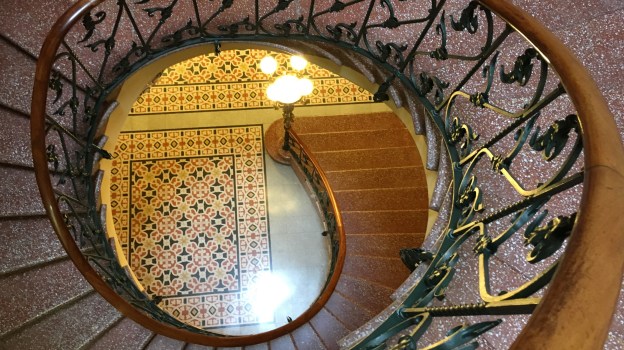
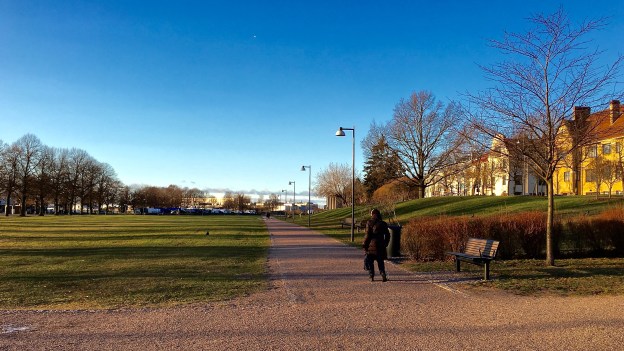
I wish to end this blog on a positive note, so I include a few more pics from my latest trip to New York and Washington. It was a trip of farewell in many ways. However, hopefully not a farewell to the U.S. we used to know – a leading Western democracy.

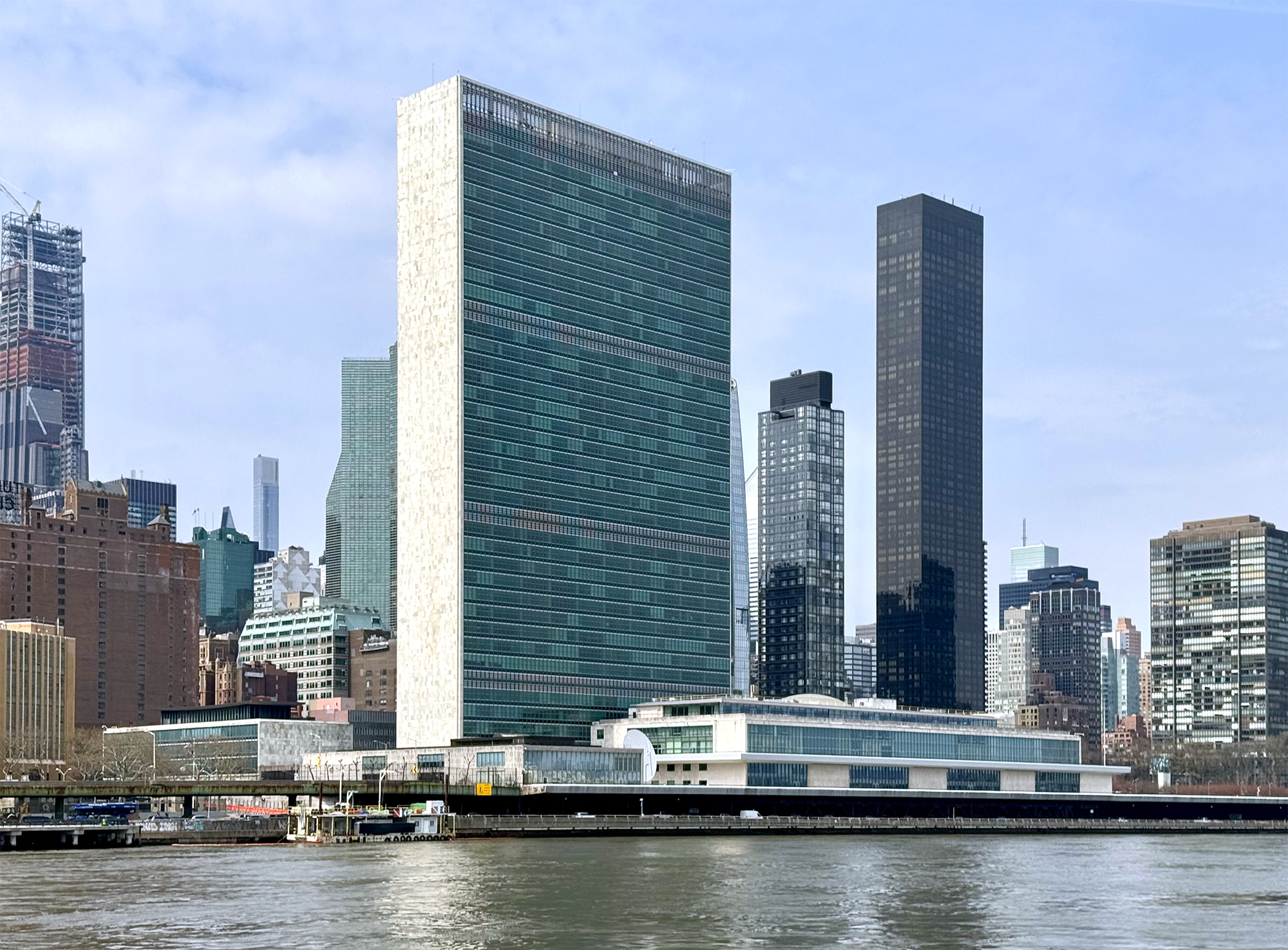
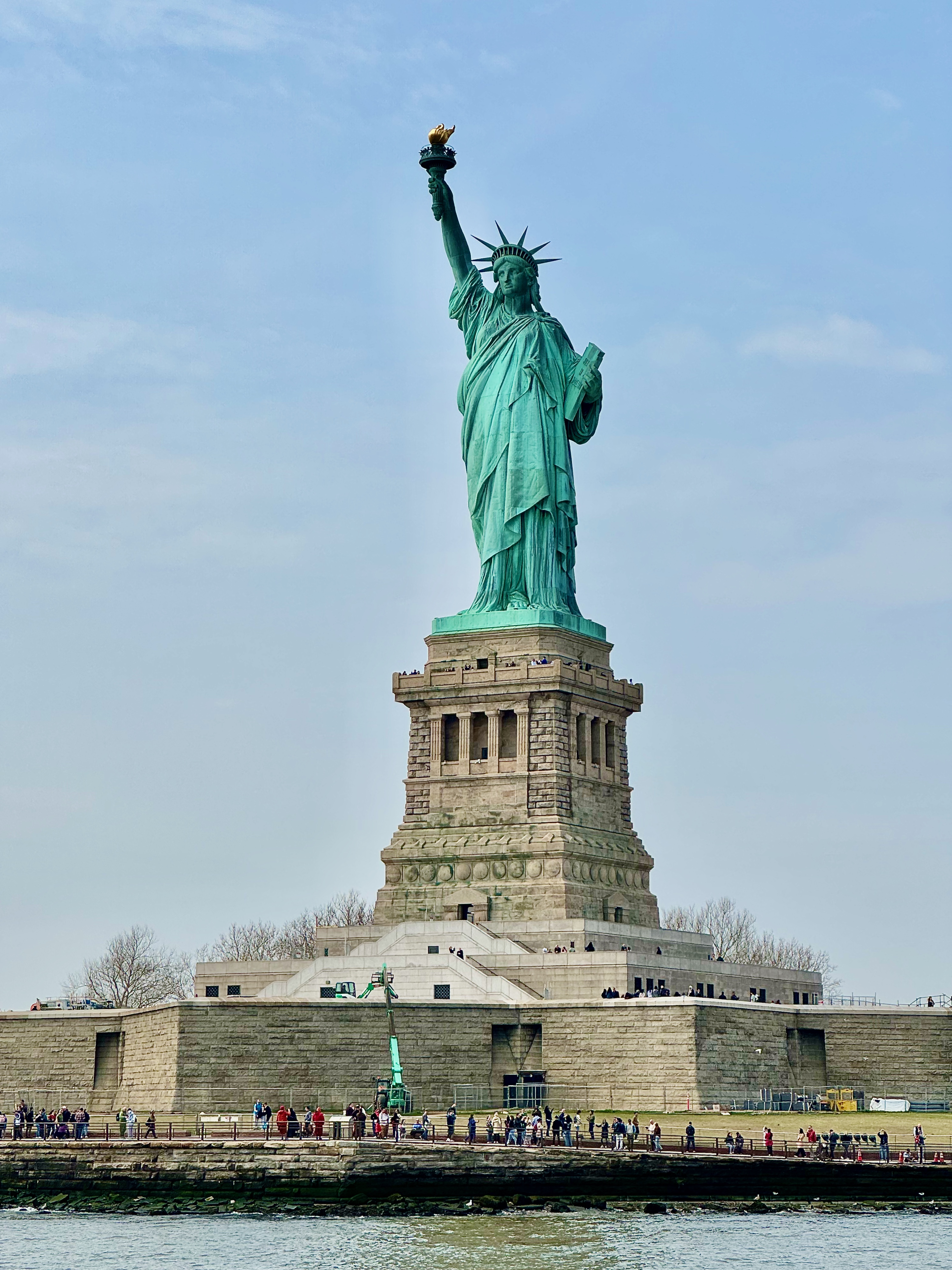
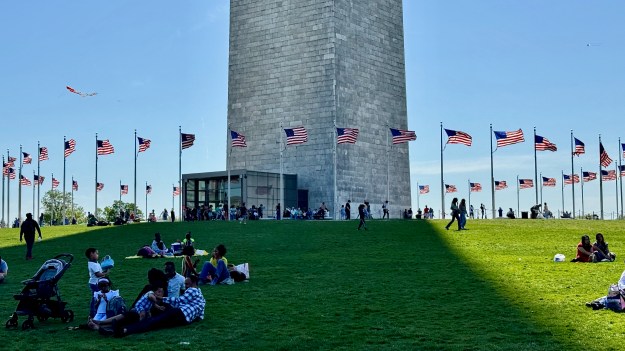
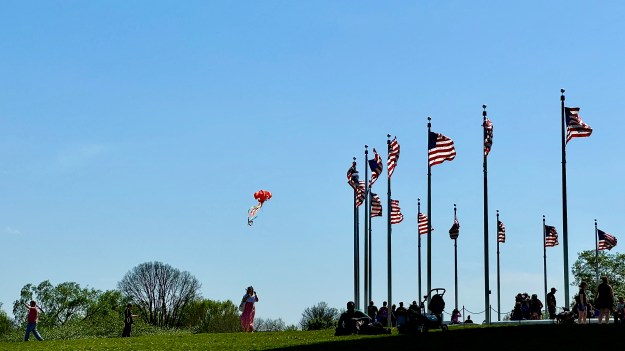
This trio of pictures serves as a reminder that the angle we view things from changes the picture we see. It is also a reminder that what once was destroyed can be rebuilt with time and effort – even though it will never be the same.

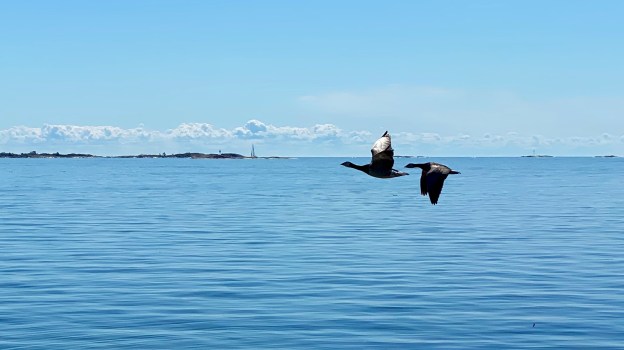
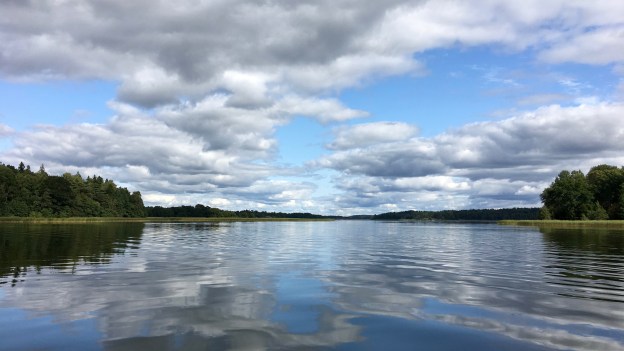
My final picture is a reminder of the fact that, while man can strive towards the skies, nothing rivals the beauty of nature. The need to safeguard our environment is one more reason not to give away our power to make a difference.

My AI assistant (by courtesy of WordPress) kindly gave my feedback on this blog. It suggested that I should add some examples on how to make a positive difference. Sadly, I am still struggling with the how myself. My first step has been to admit to myself that I am part of the problem. I think we all need to find our own way from there. Where there is a will, there is always a way.

#democracy too

We all know there is no such thing as normal people or normal actions. No two normals look alike. Your normal looks different from mine.

Still, I feel confident in my statement: Normal is out. We are bombarded by so much information that it takes something beyond our own concept of normal to drag our attention away from our comfy interaction with like-minded people in our chosen information silos; the ones provided by courtesy of the Chinese, Elon Musk, international investors or local media providers.

All too often it takes something negative to catch our interest.

In a media overload world, a happy life is seldom interesting unless it involves a mind-boggling rags-to-riches story or is achieved after serious, preferably health-threatening, setbacks. Great grades and a stellar job record do not a good story make. Ruining your successful career spectacularly – now that is clickworthy. Genders are interesting mainly if there is an internal or external struggle or an equality issue involved. Faith is newsworthy if it involves celebrities or leads to violence or oppression rather than good deeds.

If you want to be heard, make sure you are not too normal, whatever that means in your target group. You can opt for a memorable hair style like Boris Johnson, an interesting age gap marriage like President Macron and his Finnish counterpart, Niinistö, or you can ride the minority van, with skin colour, gender or sexuality as your strength. Unusually good or bad looks never hurt either.

Actually, any of the above alone may not make the cut these days. The world is looking for something more – and more – whatever that is.

Even a fish has to be quite out of the ordinary to grab our attention. Hence my featured image, which also symbolises my take on the effects of social media. It’s an ugly picture.

No wonder everyone is out there riding their own “ism” be it fanaticism, racism, or some other ism. Even Putin and Trump have realised that plain old crazy is not enough; you need to spice it up with wars, conspiracy theories and isms.

Sadly, my favourite news media, Helsingin Sanomat, all too often falls into the trap of letting social media algorithms take the driver’s seat, while HS takes the backseat with its semi-analytical follow-ups on the latest “talk of the town”. It’s the easy way out in search of clicks: Tailgate social media regardless of whether the issues trending on it are truly worth the coverage journalistically. It’s also the way to get caught up in warped agendas driven by social media savvy parties instead of doing your own thinking and legwork.

I am aware that I am crying for journalism as we have known it – and still know it, when my favourite news media is at its best. Things change. Maybe traditional journalism is fated to take the backseat. But why seat yourself there voluntarily?

As far as the Chinese are concerned, the more mindless the TikTok content and its followers become, the better. In China itself, TikTok is not allowed. Elon Musk, in turn, makes no secret that X is now his – to do with as he pleases – and rules do not please him. Social media platforms do not care a jot about fact-checking, good journalistic practices or democracy. They pose as a way to become heard, but their algorithms make sure that not everyone is. Why help them?

Our view of what is to be considered a fact may change as we learn new things. That is as it should be. However, thanks to social media, more and more people seem to be buying into the thought that facts are only a matter of opinion; just pick your own alternative fact and go with it, no proof required. The same trend seems to apply to the rule of law; if it doesn’t “work” for you, just ignore it and do as you wish.

As like finds like by courtesy of social media algorithms, fiction becomes fact to so many that no fact-checking can halt the process. Western democracies are slowly being trained to a life of panem et circences (bread and circuses). With AI in the mix, the stories will only get wilder and wilder and so will probably the voters along with them.

As the lines between possible and impossible, true and false, and right and wrong become blurred, it becomes increasingly tempting to vote for someone, who – ably aided by algorithms- sells you an exciting story and promises you both bread and the full circus experience. It’s such an easy solution: Just jump on the circus wagon, forget your troubles and doubts and hope for the best.

How did billions of people end up being led by their noses without protest? What about free will and independent decision-making? When did we lose this War Over Minds to evil algorithms? Is the damage irreversible? How far are we gone? When all is said and done, will our sense of real and unreal, true and false, right and wrong be totally lost?

The way things are going, we will vote ourselves out of democracy before we know it. For all the wrong reasons – just because we can.

The fight to save Western democracies starts at home. You may not have to risk your life in the physical sense, but you must be ready to make sacrifices that may feel life-changing. Leave your social media accounts – at least the ones that are clearly led by parties beyond all control. You will not beat them by joining them.

Let the fight begin #democracy too!

Wait – I realise I am not on TikTok, X, Instagram or Facebook. No algorithms will push this message forward. Then again, even if I was, would they really push it? You can see where this is going. It is, indeed, an ugly picture.

Trust, hope and wishful thinking

Trust is all too easily misplaced, often shattered, and very difficult to regain once lost. It is key to all successful relationships, be they romantic, working or political ones.

There is a fine line between trust and hope.

There are very few things any of us can truly trust will happen (death being one), even if we place our trust in some sources, people, or actions in the hope that we have not misplaced it.

Blind trust is nothing more than a disaster waiting to happen. Whether you trust that a violent spouse will stop hitting you, that an employer, who never gave you a raise, will finally see your value, or that democracy and human rights will soon thrive in Russia; you are  trusting and hoping against reason, which is just wishful thinking bordering on self-deception.

So much trust and hope has been lost lately in the Western world.

We may have trusted that adherence to the rule of law would remain a constant cornerstone of Western democracies –  but that was before Donald Trump.

We may have thought that the world stood a chance of agreeing globally on measures needed to solve climate change issues and promote peace on Earth – but that was before the pandemic taught us that borders could be closed as easily as they were opened, and the war in Ukraine taught us that wars could start and escalate out of control at our door step with little warning.

The loss of trust and hope is a global phenomenon. It is felt all over. African countries are left vulnerable as China, Africa’s largest creditor, tightens lending taps. Suddenly, we are back to “every country for itself”.

The outpour of solidarity and concrete help to countries that face aggressive wars or natural disasters may still give us some hope. But our trust in a brighter future and global co-operation has suffered severe set-backs as hard-fought agreements aimed at safeguarding human rights and peace are being ignored as if they never existed.

We tend to hope against hope, when the alternatives are too gruesome to be considered.

Many Floridians were reminded of this the hard way recently as they hoped that hurricane Ian would not make its way to their home or business; that if it did, it would not be too bad; that even if it was bad, they would be fine because they had survived hurricanes before and were well-prepared; and even if the worst was to happen, they would get the aid they needed. In all too many cases none of these hopes have come true.

I listen to my friends pondering the Russia-Ukraine war, hoping that the Russian people will soon realise  that Putin is not to be trusted. As if most Russians didn’t realise this already. They just aren’t prone to wishful thinking. They see no better alternative in the horizon, so they gravitate towards the known “evil”. It is what they have always done. The Russian people are not prone to rebellion, they are fatalistic. They have seen time and time again that little good comes out of trying to rebel. They do not trust the West anymore than they trust Putin.

I listen to the Western media celebrating the successes of the Ukrainian army and speculating on what a dreadful loss this and that is to the Russian army. Personally, I just see losses on both sides. In addition to the lives lost one both sides, the Russians (and those Ukrainians, who have ended up under Russian rule) are fast losing even the remnants of their human rights. There is no peaceful solution to the Russia-Ukraine war in sight.

The Chinese are credited with the understanding that even if you are aggressively furthering you own agenda, you should try to do it without actively provoking deep enmity in your counterparts. Cornered enemies are the worst possible enemies. They have little to lose. I find myself acting like the regularly battered wife in search of a why; wondering whether we (the West) did something to provoke the war in Ukraine. Let’s face it, the West has a tendency towards off-putting self-righteousness at times. Can the war really be attributed to a psychopath leader strong enough to convince millions of people that several wrongs make a right?

I opted for the latter explanation as I watched the reactions of the crowd that gathered in Moscow’s Red Square to celebrate the (forced) annexation of four Ukrainian regions to Russia. Many in the crowd could be seen applauding in all seriousness as Russian Putinist actor Ivan Okhlobystin gave the performance of his life as MMFM  a.k.a. Mad Man Frothing at the Mouth. Some additional cheers may have been added when editing the Twitter clip, but the crowd was definitely not protesting.

Okhlobystin, who is famous for quotes like “I would happily put all the gays alive in an oven”, called for a “holy war”, whipping the crowd into action with pearls like: “Fear old world! Deprived of true beauty, true faith, true wisdom; operated by madmen, perverts, satanists! Be afraid, we are coming. Goyda (a cry for immediate action), goyda !!!”.

To be clear, the old world in this scenario is the Western world.

While most of me was appalled by the performance, there was a small part of me that was having a quiet laugh. To a Finn Okhlobystin’s “goyda, goyda” call sounded like someone with a severe head cold hollering “koita, koita” i.e. try, try. Which seems apt, as it’s what the Russians have ended up doing in Ukraine without much success.

Your guess is as good as my guess, when it comes to what happens next. If the Red Square celebrations represent the truth of Russia today, the country is careening towards total unreason. It is ironic that Putin has described the war in Ukraine as a fight against the Nazis. This is not a case of the pot calling the kettle black. It’s the black pot calling the kettle a black pot.

I am in mourning. I mourn a – presently  bygone – world that I had high hopes for; hopes that I am rapidly losing. Yet I recognise that this is not the time to lose hope –  if we do, more will be lost.

We need to continue to do what we can to ensure that the democratic values prove resilient and that global co-operation in key matters is not endangered because of mistrust and fear.

At the same time we need to recognise that each country has its own set of values and a right to build its own future as its people see fit as long as it doesn’t endanger others. I have some trouble buying into the idea that it is up to the West to plan the future of post-Putin Russia. It is up to the Russians to do so. The only thing others can do is aid them in ensuring that such decisions are freely made based on freely accessible true information, not guided by fear and misinformation.

Please don’t let me be misunderstood

The futile hope expressed above is shared by many. Songs have been sung about it, most notably by Eric Burdon and the Animals in 1965.

Sadly, misunderstandings are not on a downward trend. The modern Western world, as we have come to know it, is becoming increasingly postmodern. The focus is more on values, rights, symbols and identities.

To better understand these changes, I googled my way through various “philosophy for dummies” articles and revisited some books I had read years ago.

I started with scepticism. Sceptics (too) come in many forms depending on the time and the culture. To make a long story short I will quote Wikipedia: “Philosophical sceptics are often classified in two general categories: Those who deny all possibility of knowledge, and those who advocate for the suspension of judgement due to the inadequacy of evidence.”

In theory, it could be said that Donald Trump’s former counselor Kellyanne Conway was just taking a philosophical approach to the matter, when she defended White House Press Secretary Sean Spicer’s false statement about the attendance numbers of Donald Trump’s inauguration by stating that Spicer gave alternative facts.

Along those lines, we could even argue that she took philosophy to a higher level, when she later referred multiple times to a non-existent Bowling Green massacre. In terms of ultimate scepticism: Who is to say what is existent and non-existent?

Don’t get me wrong – despite my philosophical forays, I am still a firm believer in reason and knowledge. Kellyanne Conway’s untruths are still fiction not fact.

But the more we communicate, the more evident it becomes that philosopher Ludwig Wittgenstein got it right, when he argued that the logical structure of language draws a limit to meaning and thereby to the the expression of thought. To simplify in the extreme: We will always be misunderstood and misunderstand because we each think in our own, subjective way. There is no language and use thereof that everyone would understand alike. Language and the use of it is always relative.

When we combine this limitation with an increasing focus on the individual and on values, rights, symbols and identities instead of more quantifiable issues, the possibilities for misunderstanding become almost limitless.

The more we discuss things that Wittgenstein considered undiscussable due to the limits of language, the more we venture away from sense to nonsense. The issues themselves are not nonsense, but any statement about them is, if Wittgenstein is to be believed.

No wonder we tend to exist in our own, Internet-facilitated bubbles these days. As we discuss the undiscussable, it helps that we at least start off on the same page whether in terms of religion, values, rights, symbols or identities.

At this point I have to stress that in many parts of the world people are either still fighting to survive in a material sense or fighting to get themselves and their opinions heard. Postmodernism is a luxury that is not affordable to all. No wonder Western ideals seem foreign and even naive to many – not only outside the Western world, but also within it, which should not be ignored.

I myself struggle at times to buy into broadly defined, high-flying programmes for the betterment of mankind, or demands for a wide range of services to meet the individual needs of all and sundry.

I am stuck back in the modern world; bemoaning the lack of reason, knowledge, practicality and cost-efficiency, and worrying about financing.

To avoid misunderstandings – programmes that aim to contain the negative effects of climate change are a necessity, not something I would consider high-flying.

The refrain of my theme song starts off with “I’m just a soul whose intentions are good.” It seems at times that our postmodern Western world is positively drowning in good intentions.

Maybe the nature of our intentions is the only thing that truly matters in the long run? Which would lead us into the nightmare of defining good and evil.

First we would have to decide, whether to approach the matter through religion, ethics, philosophy or psychology. The mind boggles – there are so many branches and trees that is impossible to see the whole forest.

Maybe I should go with Spinoza, and define good as something we certainly know is useful to us and evil as something we certainly know hinders us from possessing anything good. Or maybe not – I can just hear Putin defending his war in Ukraine to the Russian people in terms of Spinoza.

So maybe I will just go with the idea that evil actions consist of elements related to unbalanced behaviour involving e.g. expediency, selfishness, ignorance and neglect. Good intentions would in turn consist of elements like compassion, moderation and humility.

As you can see, I am making choices. There is no absolute as far as good and evil goes. There  is my choice and your choice. Which makes it easier to understand why Finland’s and Sweden’s good intentions may not always be considered good in Turkey. Compromises have to be made.

Unless we fully understand this, there is no way for alliances to work in an increasingly postmodern world: A world in which people in their respective bubbles are boosting each others belief that their own definition of good is the right one.

To take this a full circle. Was Kellyanne Conway, and by extension Trump,  just a philosopher with good intentions? Well, pigs may farm, if Orwell is to be believed, but they have yet to fly.

But Kellyanne was onto something. In an increasingly postmodern world everything is subjective. This inevitably affects politics too.

People find it harder and harder to get down from their high moral horses, and cope with the idea that there is a whole world out there that doesn’t see things their way. The question is, where will this fragmentation lead us?

Putin probably looked at the Western world and saw the fragmentation – a weakness as far as he understood. A costly misunderstanding. He never saw the underlying strength. In a postmodern world that focuses less on the material, independence and the right to chart your own path becomes the one thing people are ready to support and defend to the extreme. It is not about countries anymore, it is about each one of us personally.

To come back to my blog title – you will probably misunderstand this blog to some extent, but I have realised that this is not necessarily a bad thing. All thoughts are equal when we discuss the undiscussable.

Leaders and followers

Important fights are being fought today – and have been fought throughout history – in the name of social, political and economic equality. Many of them for causes that I support; not only with words but with actions.

However, being a niceoldlady and an old school liberal, I have a tough time buying into some of the fighting methods. All too often the fighters are so caught up in the righteousness of their cause that they are intolerant in the name of tolerance, harass in the name of non-harassment and at times even call for glaringly unequal treatment in the name of equality.

To be clear, when denouncing calls for glaring inequality, I don’t mean calls for measures that can help minorities catch up with the head start that years of inequality have given those in positions of power. Sometimes such catching up can best be facilitated through measures that in themselves are unequal treatment including, but not limited to, quotas.

However, lines have to be drawn somewhere. Mine are drawn pretty much at the point where French writer Pauline Harmange proudly states: ‘Mois les hommes, je les déteste’, which basically translates to ‘I Hate Men’. This is not just a catchy title for her pamphlet as one might assume; it is the prevailing sentiment throughout her essay. The thinking being that you are allowed to blatantly hate those that have done you wrong, if you are in a minority.

Even if one were to buy into that theory, the problem remains that not all men have done Harmange, or women in general, wrong. Still Harmange feels free to profess to hate men in general. I am not into hating, but should I profess to hate something, it would be sweeping generalisations and hate speech.

Then there are those, who feel free to rewrite history and interpret past actions with total disregard for facts and truth just to prove their point. My favourite newspaper recently carried a major story on women as software engineers. To make a short story longer, the writer took all sorts of liberties both with facts and their interpretation.

As if gender equality wasn’t a good enough cause on its own merits, the writer saw a great conspiracy in the fact that Finnish card punchers in the early 1960’s and 70’s were predominantly female, while a majority of the early 70’s software engineers were male.

As one commentator pointed out, card punching (a computer-related job, which in itself required great concentration and careful execution, but had nothing to do with software engineering) was as closely related to software engineering as my online banking is. In order for the software to work properly, the inputted information has to be correct, but that does make the one who punches or types in the information a software engineer.

Instead of acknowledging this, the article writer sweepingly alluded that the female card punchers could be considered the first software engineers, and that the hiring tests for software engineers were different from those for card punchers in order to favour men. The fact that the jobs were totally different – hence the hiring tests were different too – did not fit into her storyline. Therefore it was disregarded.

The writer then proceeded to speculate that the use of the term software was related to the fact that the early card punching “software engineers” were women and hence the programs were considered easy to produce i.e. ‘soft’ as opposed to the term hardware, which referred to something difficult and hard.

And here I was, thinking that the use of the term hardware originated from the mid 15th century concept of small metal goods i.e. referred to the physical components of a computer.

The sad thing is that with less emphasis on proving a point by any means – right or wrong – and more emphasis on getting the facts right, the article would have been interesting. Instead, it became a sorry example of how a good article can turn bad and a good cause can be undermined by blatantly disregarding facts.

Finland was actually training both male and female software engineers as fast as they could be hired in the early 70’s. The real story to tell would have been, why the number of female software engineers didn’t increase in proportion to the early numbers. That story did not make its way to the surface past the alternative facts, so it has yet to be told.

Wrongs do not a right make. The spreading of hate and unreason – or just alternative facts and untruths – do not promote equality; they promote hate and unreason as well as an increasing disregard for facts and truth.

Yet my favourite newspaper chose not to correct the story, but to argue that by reading the whole article a discerning reader would realise that card punchers were not software engineers, despite what the title of the article and the alternative facts presented in the early paragraphs of it claimed.

Since when did good journalism mean that the sorting of facts from fiction was to be left to the reader?

Social media has a tendency to make mountains out of molehills, but it also has the power to highlight wrongs that deserve our attention, yet they might never have come to our notice through old school channels. Most people recognise that things may be blown out of proportion, or less thoroughly researched, on social media sites. Which is why it’s so important that traditional media continues to take a more factual and in depth approach.

Originally newspapers where just that – papers with the latest news. With the growth of electronic media as well as the internet and social media, newspapers didn’t have the means to keep themselves in the forefront as news breakers. Instead, they focused on the context and the background of news.

Today social media darlings with little or no journalistic background are invited to write for newspapers in order to keep up with times and win over the next generation of readers. Unfortunately, fact-checking seems to be the first to suffer from this development.

Why give up your true competitive advantage? In addition to its adherence to time-tested journalistic ethics and standards, the reliability of its fact-checking process has so far been the true value-added of my favourite newspaper. Both are missing on social media.

Life is messy. Life is complicated. Life is seldom Instagram-ready or Twitter-formatted. Social media can serve as a podium for all sorts of voices: from silly to wise, from scary to nice, from hate to love; but we still need the context and the background.

A good newspaper is all about getting the story right and interesting enough – not about making sure it’s catchy and instantly trends whatever the cost. There will always be leaders and followers. A good newspaper does not let itself fall into the latter category as times change. It finds new ways to build on its competitive advantage instead of eroding it.

Killing me softly

Enough is enough. I’m okay with everyone and their uncle tweeting about matters that I couldn’t care less about, but I don’t want my Prime Minister to tweet in the midst of the coronavirus crisis. More importantly, I hate the publicity the government is giving me. Continue reading

Say dog

Welcome to the nastyoldlady blog. For quality purposes your viewing may be monitored and recorded. Your privacy is important to me. To hear my privacy policy, press 1. For other languages, press 2. Due to higher than normal reader volume, the wait time for this blog may be longer than expected. Continue reading