Category Archives: Media

#democracy too

We all know there is no such thing as normal people or normal actions. No two normals look alike. Your normal looks different from mine.

Still, I feel confident in my statement: Normal is out. We are bombarded by so much information that it takes something beyond our own concept of normal to drag our attention away from our comfy interaction with like-minded people in our chosen information silos; the ones provided by courtesy of the Chinese, Elon Musk, international investors or local media providers.

All too often it takes something negative to catch our interest.

In a media overload world, a happy life is seldom interesting unless it involves a mind-boggling rags-to-riches story or is achieved after serious, preferably health-threatening, setbacks. Great grades and a stellar job record do not a good story make. Ruining your successful career spectacularly – now that is clickworthy. Genders are interesting mainly if there is an internal or external struggle or an equality issue involved. Faith is newsworthy if it involves celebrities or leads to violence or oppression rather than good deeds.

If you want to be heard, make sure you are not too normal, whatever that means in your target group. You can opt for a memorable hair style like Boris Johnson, an interesting age gap marriage like President Macron and his Finnish counterpart, Niinistö, or you can ride the minority van, with skin colour, gender or sexuality as your strength. Unusually good or bad looks never hurt either.

Actually, any of the above alone may not make the cut these days. The world is looking for something more – and more – whatever that is.

Even a fish has to be quite out of the ordinary to grab our attention. Hence my featured image, which also symbolises my take on the effects of social media. It’s an ugly picture.

No wonder everyone is out there riding their own “ism” be it fanaticism, racism, or some other ism. Even Putin and Trump have realised that plain old crazy is not enough; you need to spice it up with wars, conspiracy theories and isms.

Sadly, my favourite news media, Helsingin Sanomat, all too often falls into the trap of letting social media algorithms take the driver’s seat, while HS takes the backseat with its semi-analytical follow-ups on the latest “talk of the town”. It’s the easy way out in search of clicks: Tailgate social media regardless of whether the issues trending on it are truly worth the coverage journalistically. It’s also the way to get caught up in warped agendas driven by social media savvy parties instead of doing your own thinking and legwork.

I am aware that I am crying for journalism as we have known it – and still know it, when my favourite news media is at its best. Things change. Maybe traditional journalism is fated to take the backseat. But why seat yourself there voluntarily?

As far as the Chinese are concerned, the more mindless the TikTok content and its followers become, the better. In China itself, TikTok is not allowed. Elon Musk, in turn, makes no secret that X is now his – to do with as he pleases – and rules do not please him. Social media platforms do not care a jot about fact-checking, good journalistic practices or democracy. They pose as a way to become heard, but their algorithms make sure that not everyone is. Why help them?

Our view of what is to be considered a fact may change as we learn new things. That is as it should be. However, thanks to social media, more and more people seem to be buying into the thought that facts are only a matter of opinion; just pick your own alternative fact and go with it, no proof required. The same trend seems to apply to the rule of law; if it doesn’t “work” for you, just ignore it and do as you wish.

As like finds like by courtesy of social media algorithms, fiction becomes fact to so many that no fact-checking can halt the process. Western democracies are slowly being trained to a life of panem et circences (bread and circuses). With AI in the mix, the stories will only get wilder and wilder and so will probably the voters along with them.

As the lines between possible and impossible, true and false, and right and wrong become blurred, it becomes increasingly tempting to vote for someone, who – ably aided by algorithms- sells you an exciting story and promises you both bread and the full circus experience. It’s such an easy solution: Just jump on the circus wagon, forget your troubles and doubts and hope for the best.

How did billions of people end up being led by their noses without protest? What about free will and independent decision-making? When did we lose this War Over Minds to evil algorithms? Is the damage irreversible? How far are we gone? When all is said and done, will our sense of real and unreal, true and false, right and wrong be totally lost?

The way things are going, we will vote ourselves out of democracy before we know it. For all the wrong reasons – just because we can.

The fight to save Western democracies starts at home. You may not have to risk your life in the physical sense, but you must be ready to make sacrifices that may feel life-changing. Leave your social media accounts – at least the ones that are clearly led by parties beyond all control. You will not beat them by joining them.

Let the fight begin #democracy too!

Wait – I realise I am not on TikTok, X, Instagram or Facebook. No algorithms will push this message forward. Then again, even if I was, would they really push it? You can see where this is going. It is, indeed, an ugly picture.
Knots, knits and opinions

We all have opinions, whether we recognise them or voice them. They are there from the day of our birth. Some things we like, some things we don’t. Our opinions can be based on facts or feelings, but they are still opinions: our personal take on what those (perceived) facts or feelings mean.

Which is why it was a day for the history books, when I found myself in such a relaxed state during our summer holiday that I was unable to come up with a single opinion on anything.

My mind just decided to take a break. Not even the sunset (which was beautiful in hindsight) could move me to have an opinion. It was almost startling.

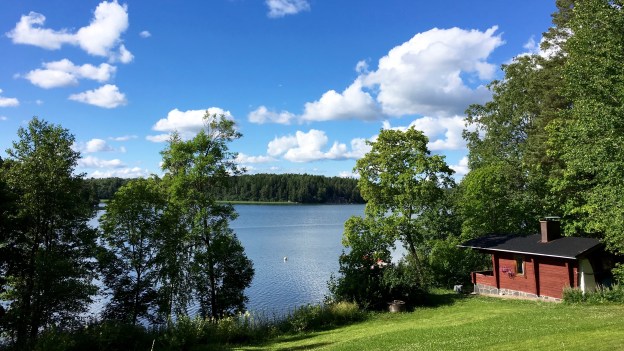
There we sat at our cosy dinner table, my partner in life and I, watching the sun set over “our” lake. We had bought, prepared and eaten early potatoes, all sorts of vegetables, and muikku (a.k.a. vendace, a species of freshwater whitefish); all straight from nearby farms and lakes. We had topped our meal off with delicious, just-picked strawberries. We were well-fed and well-rested.There was no need to think or speak. We just cherished the moment with our minds blank in the best possible way.

The war in Ukraine, climate change, Finland’s entry into Nato, the latest coronavirus news, the rising inflation numbers and interest rates, the promise of a cold winter with insufficient heating due to gas supply issues, recession speculations, rise of populism, not to mention the never-ending power struggle between the superpowers – nothing – not a single opinion on any of these was forthcoming.

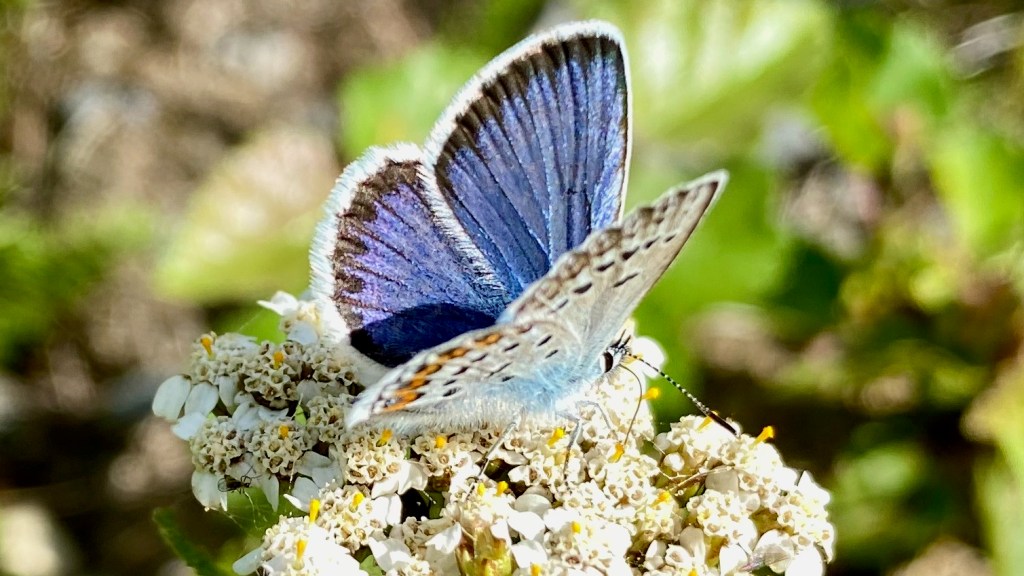
Moments like this are as fleeting as butterfly stops. I hope you have had a chance to enjoy a few of them amidst all that is going on in the world.

Reality has a tendency to catch up with you, whether you wish it or not. My favourite newspaper made sure of that. It provided me with an in depth article on all the crises looming in the horizon. The list seemed endless: debt crisis, housing market crisis, commodity crisis (including but not limited to energy crisis), Euro-crisis, China- crisis (political and financial), and a recession for the history books. All of this on top of the war in Ukraine.

Reality even invaded our balcony as we returned to Helsinki from our holiday refuge. Instead of butterflies, we could count helicopters on the deck of USS Kearsage, a 257 m (843 ft) long, nuclear powered Wasp-class amphibious assault ship that slowly slipped past us into the port of Helsinki.

Talking about wasps: I sent one of the photos above to a friend. His answering text said it all: “Not half as scary as Nancy Pelosi”.

To a political outsider Pelosi’s trip to Taiwan looked like she was stirring up a hornet´s nest that might just create the butterfly effect that puts us en route to chaos. There is a time and place for everything. The whys of this particular trip remain obscure.

Pelosi has had an impressive career. Does she really need to top her CV with “Started World War III”? To paraphrase an old saying : With friends like this, who needs enemies to feel unsafe.

To continue with sayings: Life truly is like a box of chocolates. Over and over again you bite into something sugar/chocolate-coated without really knowing what you will find inside. My first taste of Nato tells me that I will probably not love it, but I will still keep it on the menu to ensure that I get enough sustenance to survive.

Chocolates come in many forms. Often the surprises they offer are delightful. While Pelosi was traipsing around Taiwan, we went to Fiskars; a picturesque village in Southern Finland known for combining design, art and architecture in a unique and inspiring way.

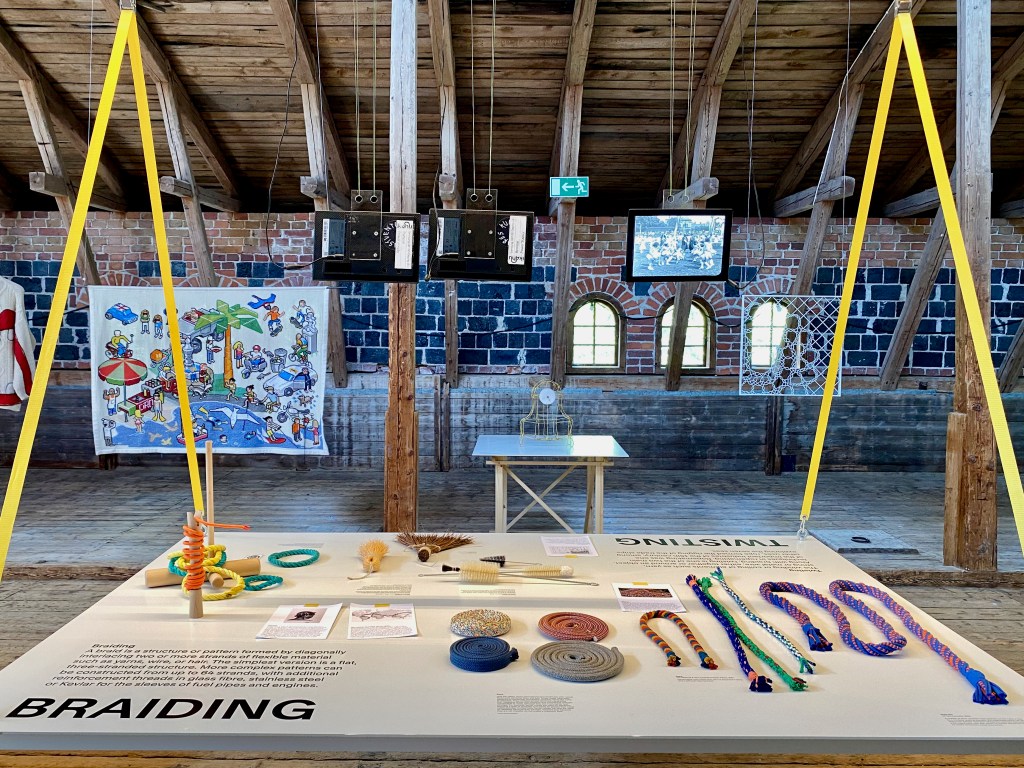
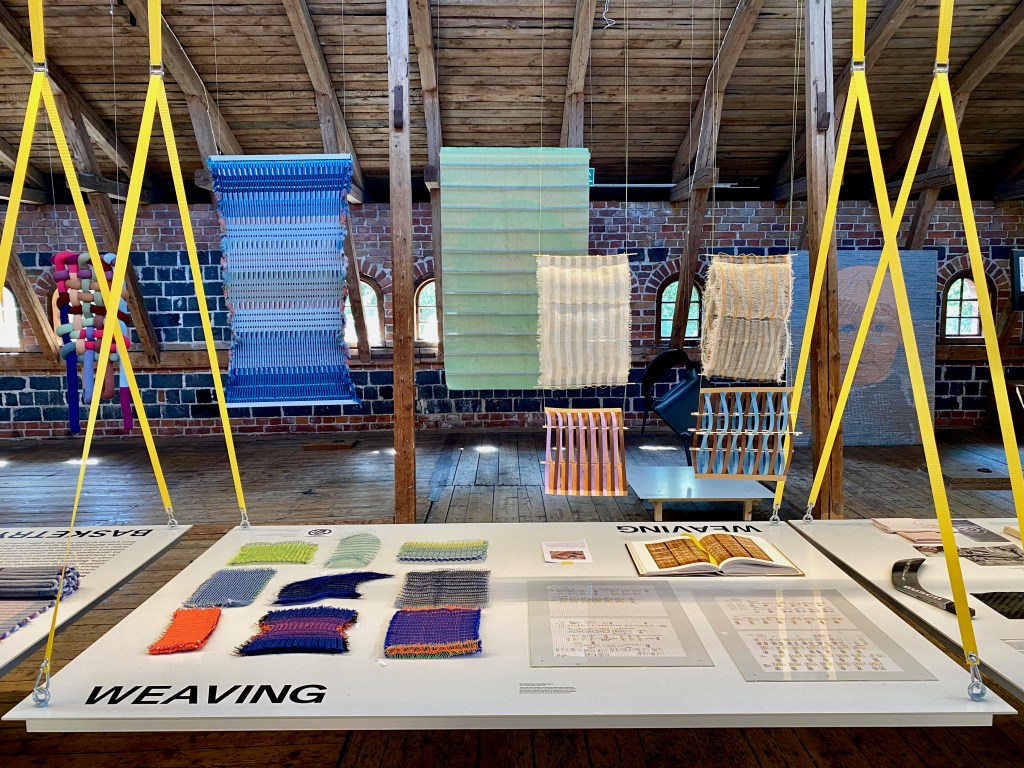
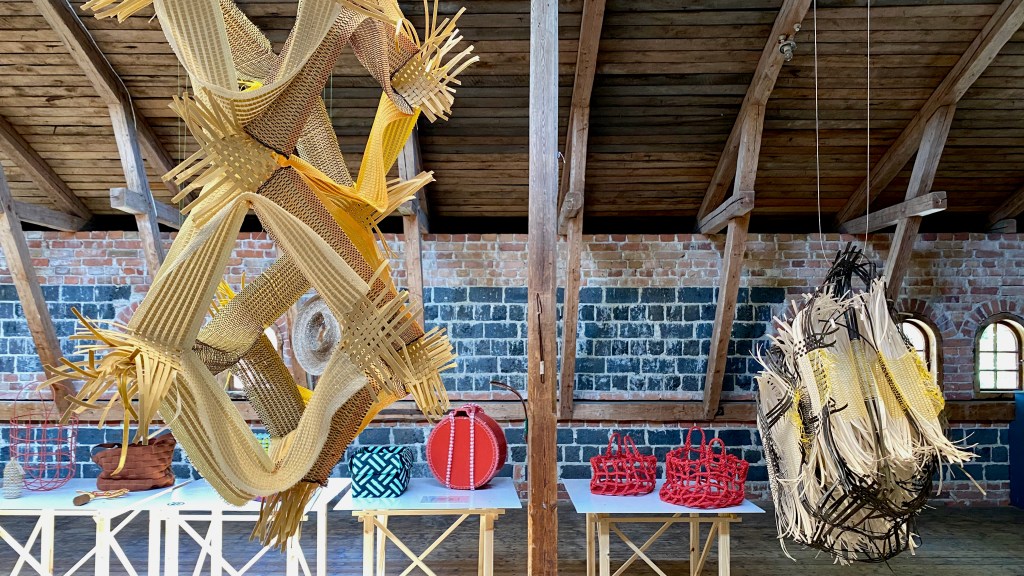
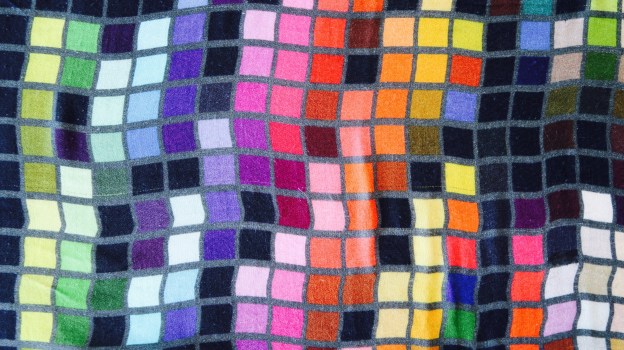
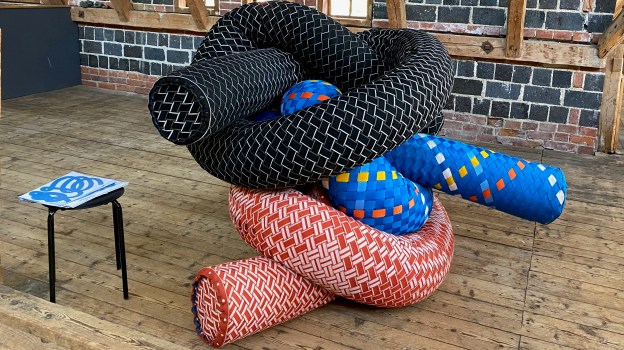
Pelosi and reality were once again forgotten, when we browsed the exhibition “U-joints: Knots&Knits”. U-joints is an ongoing research project and exhibition series by Andrea Caputo and Anniina Koivu. The exhibitions examine the functional and aesthetic relevance of this crucial design component.

Knots and Knits is the fourth chapter of the project. The exhibition was a piece of art in itself as well as in its details. It gave the viewer a new perspective on design.

I leave you with this thought: We may have managed to tie our world in knots, but hope still remains that we can continue to knit something beautiful out of it. Just look at all the ingenious things we have designed so far.

Making and breaking

The signs had been there for some time – and still it was a shock, when Russia started a full-scale war of aggression in the midst of Europe on February 24, 2022. The shock was followed by outrage in the Western world. Then came the need to do something. Anything.

Since Finland has a long border with Russia, my own actions went in two directions. Like so many others, I quickly searched and found ways to aid the Ukrainians financially. Being a Finn, I also immediately looked for ways to prepare for hard times to come; both in terms of economy and security. We Finns like to be prepared for all eventualities.

When this first flurry of activities was over, I sat down and read all I could about the reasons that led to the war in Ukraine. I felt a need to understand, why this happened. It was a need that was shared by many.

Miles of news articles have been written in an attempt to analyse the why’s of the Russia-Ukraine war. There is an abundance of theories.

According to some, Putin is hankering to re-establish the Soviet Union. According to others, he is looking to recreate the Imperial Russia of 1721 or 1914.

Some remind us that Putin has referred to the Christian fascist Ivan Ilyin as his expert on the past. IIyin considered any talk of Ukraine separate from Russia the act of a mortal enemy of Russia. Lev Gumilyov, the anti-semitic co-developer of Eurasianism is also mentioned as one of Putin’s favourite reads.

Others focus on present day mentors such as Kirill, who styles himself as Patriarch of Moscow and all Rus´ (a title that was actually abolished by Peter the Great in 1721 only to resurface in 1917 and 1943). The list of present day mentors is often topped by historian and anthropologist Aleksandr Dugin, who has rhapsodised about an Eurasian empire (including a Turkic-Slavic alliance, which is an interesting tidbit) and espoused fascist views.

The main ideologic thread seems to be ‘Make Russia Great Again’. That being the why, the how often seems to be some form of anti-globalist, anti-Western (as in anti-US) and anti- liberalistic Eurasianism.

All in all this was such a mix of ideologic contradictions that I ended up confused albeit on a higher level with regard to Putin’s goals. Not that it matters. Whatever those goals were at the start of the Russia-Ukraine war, there is only one now: to look like a winner at least in his own corner of the world. However many lies and lives it may take.

My history binge did leave me with a clearer view of how privileged I was to have enjoyed a lifetime of peace, democracy and prosperity in my little corner of the world; a world that is full of unscrupulous leaders like Putin, who set little value on anything but their self-aggrandisement.

A thrice divorced friend once commented that it took her a long time to decide to ask for her first divorce. The threshold was high, because it was a jump into something unknown. The second time was much easier as the process itself and most of the end results were familiar by then. By her third divorce she worried that divorce had become a bad habit. A way to solve problems that created new ones.

The parallels to the war in Ukraine are clear. Putin has long been on the path to full-fledged war. No one effectively called him out on his earlier forays into Ukraine. His backing of the separatists in Donetsk and Luhansk caused some, but not too many, waves, and the Russian invasion and subsequent annexation of Crimea went all too smoothly. Hence war in Europe became a bad habit. One that will create far-reaching negative consequences everywhere, not only in Ukraine and Russia.

Like a wife, who finally recognises her husband for the serial cheater he is, the Western world has finally opened its eyes and recognised Putin for the serial liar he is. The divorce is getting messier by the day. The emotional ties have been broken, but the financial ties are difficult to break.

We each tend to look at the world from our own perspective. It is understandable that the Western world feels that the ‘whole world’ condemns the war Russia wages on Ukraine. In fact it doesn’t. In many parts of the world this is just a war among others.

Some leaders see the war in Ukraine as an opportunity to wage war in their own corner of the world without Western interference. Others see it as a means to justify unjustifiable actions, such as the further exploitation of protected lands that Brazil’s Bolsonaro is pursuing.

Major countries, such as China and India, are performing balancing acts that are embarrassing to watch. Their half-hearted calls for the cessation of violence are a prime example of ‘too little – too late’.

China continues to proclaim itself a great friend of Russia. At the same time it promises humanitarian aid to Ukraine and offers itself up as a peace negotiator. It doesn’t want to be involved and yet it involves itself. China’s strategy is not two-faced; it is so many-faced that one wonders, how the Chinese will keep all faces in line. Nothing would suit China better than to have Russia take the West down a notch and end up totally dependant on China while doing so.

The fact that China only sides with one country – itself – in the long run is not unique. Most countries tend to look after their own interests. But few do it in such a convoluted manner.

I have blogged about China’s treatment of the Uighurs and its forays into mind control, surveillance and social engineering (MCSSE for short). Now I watch Russia going into full MCSSE mode. At the same time China skirts around the truth of the war in Ukraine and edits the information it feeds to its population of 1,4 billion accordingly. Up to this day (the narrative may change) there is no full-scale war in Ukraine as far as the Chinese government is concerned. There is only a Russian military operation related to Donetsk and Luhansk.

I started blogging, when Donald Trump was elected, because I recognised early on that this was a man, who had little respect for democracy and freedom of speech; a man, who thrived on fear and unreason. Still I made fun of his alternative facts. I never thought fake news were here to stay. Sadly, they are actually a key trend (to end all trends?) of our times. In olden days the masses were kept ignorant of any and all facts. Now they are actively fed fully fabricated alternative ones.

It is always a good idea to question and cross-check the things one reads, hears, or thinks one sees. Even those who do their best to check their information get their facts wrong at times.

Some facts, however, are undeniable: Putin started the war against Ukraine – and he didn’t do it to fight nazis or fascists of any kind. His own actions are the closest one gets to fascism in this war. Putin’s army is bombing civilians all over Ukraine. The people of Ukraine never asked for this kind of help. Even the most hard core Putin fans in separatist Donetsk and Luhansk may have a hard time convincing themselves that all is as it should be.

If the goal is to turn back time, Putin has already succeeded. He has turned back the Russian economy; not all the way to 1721, but some estimate even as far as 100 years back, when all is said and done.

I end up with one final thought – the one that has kept the Ukrainians fighting, and will keep me fighting in my own small way: Democracy and freedom of speech are worth fighting for, whatever form that fight might take. My wake-up call was not the Russia-Ukraine war. I woke up to the need to fight the day Donald Trump was elected.

Leaders and followers

Important fights are being fought today – and have been fought throughout history – in the name of social, political and economic equality. Many of them for causes that I support; not only with words but with actions.

However, being a niceoldlady and an old school liberal, I have a tough time buying into some of the fighting methods. All too often the fighters are so caught up in the righteousness of their cause that they are intolerant in the name of tolerance, harass in the name of non-harassment and at times even call for glaringly unequal treatment in the name of equality.

To be clear, when denouncing calls for glaring inequality, I don’t mean calls for measures that can help minorities catch up with the head start that years of inequality have given those in positions of power. Sometimes such catching up can best be facilitated through measures that in themselves are unequal treatment including, but not limited to, quotas.

However, lines have to be drawn somewhere. Mine are drawn pretty much at the point where French writer Pauline Harmange proudly states: ‘Mois les hommes, je les déteste’, which basically translates to ‘I Hate Men’. This is not just a catchy title for her pamphlet as one might assume; it is the prevailing sentiment throughout her essay. The thinking being that you are allowed to blatantly hate those that have done you wrong, if you are in a minority.

Even if one were to buy into that theory, the problem remains that not all men have done Harmange, or women in general, wrong. Still Harmange feels free to profess to hate men in general. I am not into hating, but should I profess to hate something, it would be sweeping generalisations and hate speech.

Then there are those, who feel free to rewrite history and interpret past actions with total disregard for facts and truth just to prove their point. My favourite newspaper recently carried a major story on women as software engineers. To make a short story longer, the writer took all sorts of liberties both with facts and their interpretation.

As if gender equality wasn’t a good enough cause on its own merits, the writer saw a great conspiracy in the fact that Finnish card punchers in the early 1960’s and 70’s were predominantly female, while a majority of the early 70’s software engineers were male.

As one commentator pointed out, card punching (a computer-related job, which in itself required great concentration and careful execution, but had nothing to do with software engineering) was as closely related to software engineering as my online banking is. In order for the software to work properly, the inputted information has to be correct, but that does make the one who punches or types in the information a software engineer.

Instead of acknowledging this, the article writer sweepingly alluded that the female card punchers could be considered the first software engineers, and that the hiring tests for software engineers were different from those for card punchers in order to favour men. The fact that the jobs were totally different – hence the hiring tests were different too – did not fit into her storyline. Therefore it was disregarded.

The writer then proceeded to speculate that the use of the term software was related to the fact that the early card punching “software engineers” were women and hence the programs were considered easy to produce i.e. ‘soft’ as opposed to the term hardware, which referred to something difficult and hard.

And here I was, thinking that the use of the term hardware originated from the mid 15th century concept of small metal goods i.e. referred to the physical components of a computer.

The sad thing is that with less emphasis on proving a point by any means – right or wrong – and more emphasis on getting the facts right, the article would have been interesting. Instead, it became a sorry example of how a good article can turn bad and a good cause can be undermined by blatantly disregarding facts.

Finland was actually training both male and female software engineers as fast as they could be hired in the early 70’s. The real story to tell would have been, why the number of female software engineers didn’t increase in proportion to the early numbers. That story did not make its way to the surface past the alternative facts, so it has yet to be told.

Wrongs do not a right make. The spreading of hate and unreason – or just alternative facts and untruths – do not promote equality; they promote hate and unreason as well as an increasing disregard for facts and truth.

Yet my favourite newspaper chose not to correct the story, but to argue that by reading the whole article a discerning reader would realise that card punchers were not software engineers, despite what the title of the article and the alternative facts presented in the early paragraphs of it claimed.

Since when did good journalism mean that the sorting of facts from fiction was to be left to the reader?

Social media has a tendency to make mountains out of molehills, but it also has the power to highlight wrongs that deserve our attention, yet they might never have come to our notice through old school channels. Most people recognise that things may be blown out of proportion, or less thoroughly researched, on social media sites. Which is why it’s so important that traditional media continues to take a more factual and in depth approach.

Originally newspapers where just that – papers with the latest news. With the growth of electronic media as well as the internet and social media, newspapers didn’t have the means to keep themselves in the forefront as news breakers. Instead, they focused on the context and the background of news.

Today social media darlings with little or no journalistic background are invited to write for newspapers in order to keep up with times and win over the next generation of readers. Unfortunately, fact-checking seems to be the first to suffer from this development.

Why give up your true competitive advantage? In addition to its adherence to time-tested journalistic ethics and standards, the reliability of its fact-checking process has so far been the true value-added of my favourite newspaper. Both are missing on social media.

Life is messy. Life is complicated. Life is seldom Instagram-ready or Twitter-formatted. Social media can serve as a podium for all sorts of voices: from silly to wise, from scary to nice, from hate to love; but we still need the context and the background.

A good newspaper is all about getting the story right and interesting enough – not about making sure it’s catchy and instantly trends whatever the cost. There will always be leaders and followers. A good newspaper does not let itself fall into the latter category as times change. It finds new ways to build on its competitive advantage instead of eroding it.

Divine intervention

Years ago my four-year old son came home from his day care centre in a huff. Someone at the centre had taken on the daunting task of explaining God to four-year-olds. My son’s take on the matter was that God resided in heaven and heaven was somewhere in the clouds.

If the story of Amazon kicking Parler off Amazon Cloud had broken that day, my son would probably have seen it as divine intervention.

However, as that story was to unfold some 40 years later, my son’s mind was instead wrapped around the – in his mind totally impossible – idea that people searched for God. How could that be true, he questioned. There is no ladder tall enough to reach the clouds.

On a more serious note, when global mega-actors like Facebook, Twitter and Amazon finally restrict the results of their own actions – their enabling of the spreading of fake news, hate and violence – there is nothing divine about their intervention. They are just scrambling to safeguard their backs.

It’s like the call for non-violence that Trump finally made. Too little, too late, and guided purely by self-interest.

None of these people should have been given the power they have today: not Trump, not the decision makers of Facebook, Twitter and Amazon. I think we all see it clearly, but have no idea what to do about it.

Yet the problem needs to be addressed. There has to be a reasonable way to make sure that social media giants can’t act as gods of free – or censored – speech on their platforms without any real outside control. Owners come and go, platforms easily remain, whether benign – or not.

It’s not only about allowing calls for hate and violence on worldwide platforms. It’s just as much about the ability to suddenly turn the off-switch on a president, however misguided he may be. None of these decisions should be solely up to a few decision makers, whose primary loyalty is to their investors.

Since self-restriction is difficult, there has to be enough outside pressure to ensure that the fine line between free speech and criminal, systematic misguidance is drawn by institutions that have been set up for that purpose with due process.

No border safety measures and defence programs are more important than this. The ever-existing missile threat may prove to be a small problem compared to the threat posed by the potential to subtly and systematically spread disinformation to billions of people.

This has to become a priority for decision makers, however long their to-do lists already are.

Trump did teach us something valuable. The Former White House Chief of Staff John Kelly has the right of it: We need to look infinitely harder at who we elect, including examining the candidate’s character and ethics.

However, since this is easier said than done, we also need to look infinitely harder at how lying and bullying could become the presidential norm overnight.

My favourite newspaper, Helsingin Sanomat, published a remarkably thorough info package on the what, where, when and why of the Epiphany of Trump’s Presidency.

I am not referring to the Christian holiday Epiphany – although the dates do coincide. I am referring to the storming of the U.S. Capitol; the sudden manifestation of the essential nature of Trump’s presidency: Self-inflicted chaos.

One of Helsingin Sanomat’s excellent articles explained how the angry dissent that Trump built on has been steadily growing online since the early days of the web. What the article forgot to mention is that extremist groups become big much more easily, when they have access to big platforms with algorithms that speed up their growth.

Trump could write the manual on “How to lie and bully your way to the White House”, but he could not have succeeded in creating the chaos of today without Twitter and Facebook.

It’s time to move on and make sure that votes still matter, that good government still matters. We need international co-operation and legislation to ensure that reason prevails on and off social media in the future.

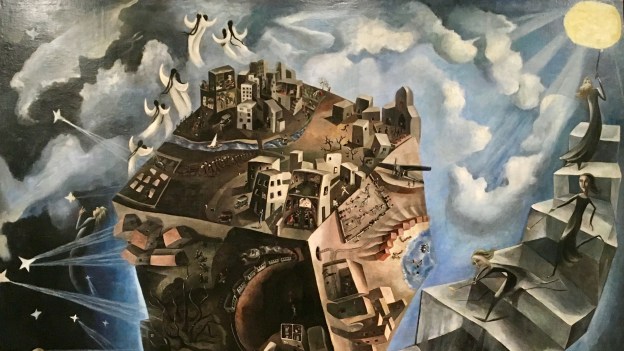
Note: My featured image is an excerpt from Angeles Santos’ painting “A World”. Since the painting is from 1929, it’s safe to say that is was never meant as a commentary on Trump or social media. But somehow it fits our world today. Sadly, my camera never caught the whole painting.

Liking as a way of life

These days everybody wants to “hear from me”. They are eager to empower me. They want to know what I like and dislike. Suddenly empowering others has become the easiest way to avoid responsibility and accountability in your chosen profession. Continue reading

A one hour wonder

It’s time to stick my spoon in the soup, which is a Finnish saying for adding one more stirrer in the pot or finger in the pie. I am taking a moment to contemplate Finland, with some politics and hurricanes thrown into the mix. Continue reading

We are what we condone

Finland just took a turn for the darker. The populist Finns Party chose Mr. Jussi Halla-aho to be its new leader. A man who is a scary combination of analytical mind, lack of empathy, and stark bigotry. Continue reading

A Dunbar moment

You have probably heard of Dunbar’s number. It’s all about the size of our brain and our relationship groups. To be exact, it’s about the size of our neocortex relative to the rest of our brain. Continue reading

Modern lynch mobs

We keep hearing that “social media was enraged” or “social media went crazy”. Social media gets people fired, casts them off TV shows, has big corporations scrambling. There are no extinguishers at hand when the mob is on fire. Continue reading