The Internet caught us with our defences down. With AI in the mix, things will probably only get worse, whether we fully buy into Yuval Noah Harari’s doomsday predictions or not. We can make a mess of this world all on our own, with or without a sentient AI.
We are losing contact. Contact with real, live people and the non-virtual reality. We are also slowly but surely losing one of the most important building blocks of human progress – our trust in what we have learned, what we see and what we hear; in fact, our trust in almost everything and everyone.
The common denominator of the Internet generation is not a specific birth date. To me, all those who have experienced the commercialisation of the Internet from the 1990’s onwards are part of the Internet generation. Their lives have changed fundamentally as the services and technologies that rely on the Internet have woven themselves into virtually every aspect of modern life, especially in Western democracies.
Along with the good came the bad. While it became easier to spread and find substantiated information, it became just as easy to spread alternative “facts”. While it became easier to form bonds through shared hobbies and interests, it also became easier to band together to spread hate speech and to participate in illegal activities, including virtual warfare.
Somehow we have lost ourselves in this world wide environment. People google their way to “knowledge” indiscriminately. Everyone is becoming their own expert on all things. The way things look has become more important than the way they truly are.
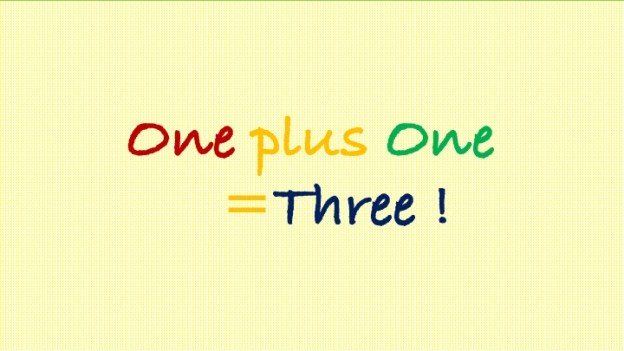
Suddenly, one plus one doesn’t necessarily equal two. It only takes someone on the internet who professes to know that two is just a hoax – the real answer is three. Who can argue with that in a manner that those who choose to believe such a statement would understand?
New ideas travel fast over the Internet, but so does resistance to them too. While the Internet has provided new opportunities for many, it has also brought losses to many. Jobs have been lost, shared beliefs and values have been torn apart – the list is long.
In turbulent times people look for strong leaders. Saying you are strong does not make you strong. Strength is not about acting as if you have all the answers. Yet Donald Trump and J.D.Vance have once again proven that people confuse bullying with strength. Voters are ready to be swept away by a rhetoric that changes with the audience and often has little basis in substantiated facts. They don’t care whether the answers given are the same that were given a year or even a week ago. As long as people hear what they want to hear, they are happy. Even if they know that the promises made are not in line with earlier actions, or that some statements have already been proven to be outright lies.
This is actually very human. The less we trust, the more we trust blindly, because we still need to trust in something. It is easier to just close your eyes and hope for the best.
I am not into blind trust, but I do hope that reason will prevail: that the American people will not opt for a President, who has openly promised to act as a dictator.
However, the presidential election alone will not solve the basic problem: Substantiated facts are becoming irrelevant.
How is one to govern and build a good future, when well-researched facts are treated by a growing number of decision-makers and voters as just one more fact among an increasing number of unsubstantiated alternative facts. Many of which are freely offered on the Internet by disruptive players – both domestic and international.
On that note, I once again urge everyone to leave X and return their Teslas. Elon Musk personifies all that can go wrong, when you misuse technology and power.
How does a democracy that allows people to freely do that function? Maybe the answer is that it doesn’t. Maybe we won’t have to wait for a catastrophe wrought by climate change or nuclear weapons. Maybe we are living the catastrophe already without fully realising what is happening.
Can we truly even trust ourselves? There is so much conflicting information. Should we do something? What can we do? Is it too late to stop this – whatever it is? No one seems to be in charge. It would be so easy to let someone else decide.
Which is exactly how dictators are born. Be they Trump, AI or any other party to whom or which we surrender our decision-making rights. It is easier so – until it isn’t, but by then it is too late.
My take on all of this: If you are lucky enough to live in a country where voters still have some say in decision-making, focus on keeping your future right to vote safe from wannabe dictators. The rest can be dealt with later.
NOTE: The earlier version of this post contained a double paragraph, so I am reposting it.
 Niceoldlady